
When a scan report says contracted gallbladder, it can sound worrying, especially if you were not expecting anything unusual. Many people immediately search what does a contracted gallbladder mean because the phrase feels serious, but the meaning depends heavily on timing, symptoms, and the reason the scan was done.
A contracted gallbladder simply means the gallbladder looks smaller, shrunken, collapsed, or not fully filled with bile at the time of imaging. Sometimes this is completely normal, such as after eating. Other times, it may point to gallstones, chronic inflammation, or a gallbladder that is not storing and releasing bile properly. The gallbladder normally stores bile and releases it during digestion, especially after meals that contain fat.
What Is the Gallbladder and Why Does It Contract?
The gallbladder is a small pouch under the liver. Its job is to store bile, a digestive fluid made by the liver. When you eat, especially a fatty meal, the gallbladder squeezes bile into the small intestine to help digest fat. This squeezing action is normal.
That is why a gallbladder may look contracted after eating. If you had an ultrasound or CT scan soon after a meal, the gallbladder may simply be empty because it already released bile. For ultrasound exams, patients are commonly asked to fast for several hours so the gallbladder can fill and be seen more clearly.
So, the first question is not only “what does a contracted gallbladder mean?” It is also: Were you fasting before the scan?
Contracted Gallbladder Meaning on Ultrasound
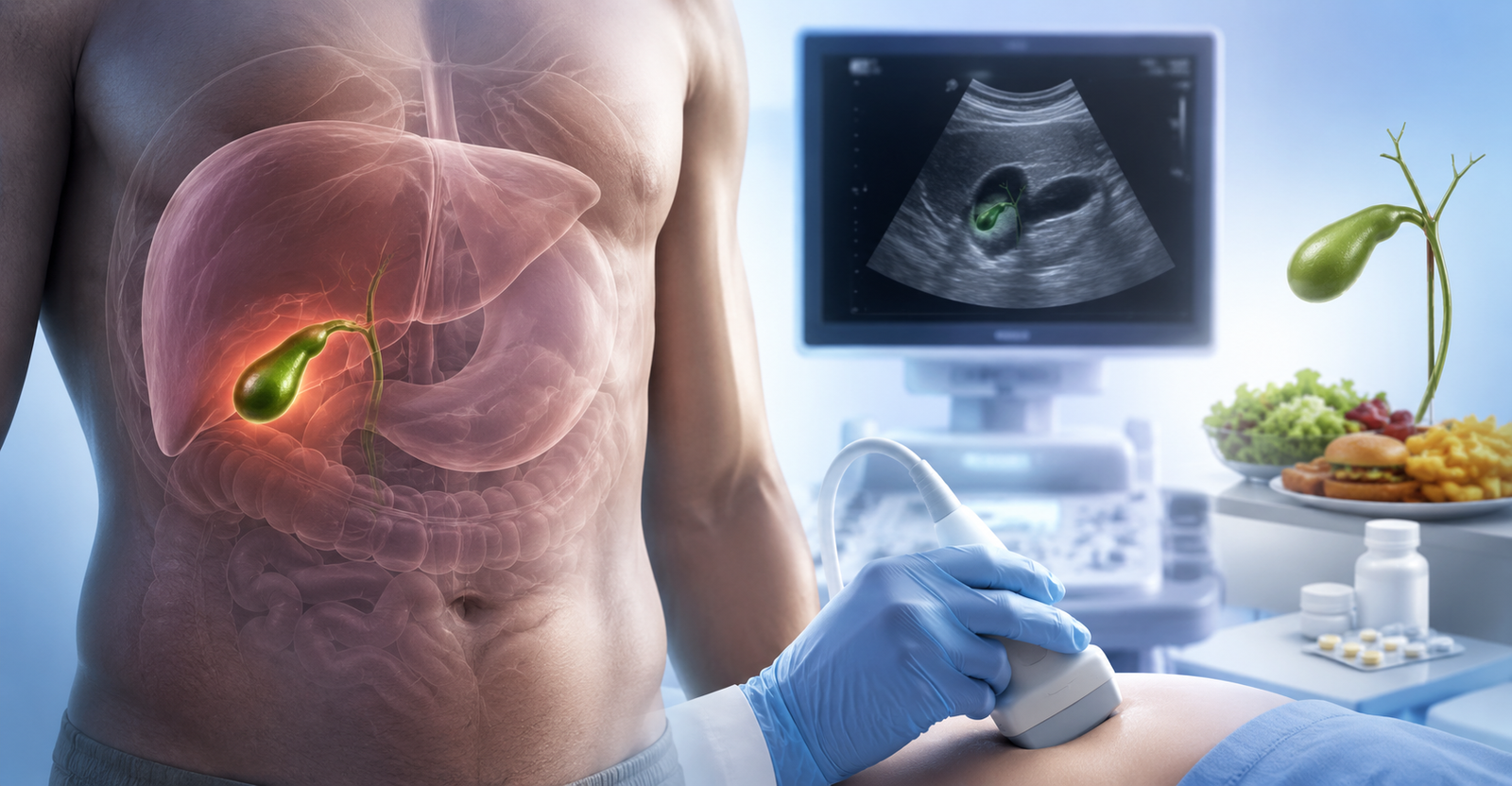
A contracted gallbladder ultrasound result means the gallbladder appeared small or hard to see during the scan. This can happen for several reasons.
If you were not fasting, the result may be less meaningful. A recently emptied gallbladder can look small because it has done its normal job.
If you were fasting properly and the gallbladder was still contracted or not visible, doctors may look more carefully for gallbladder disease. Older ultrasound research noted that a nonvisualized gallbladder in a fasting patient should be considered abnormal until explained.
Common ultrasound-related phrases may include:
- Contracted gallbladder
- Collapsed gallbladder
- Nonvisualized gallbladder
- Gallbladder not well distended
- Small contracted gallbladder
- Thick-walled contracted gallbladder
- Gallstones with contracted gallbladder
These phrases do not all mean the same thing. A contracted gallbladder with no symptoms can be very different from a contracted gallbladder with pain, fever, nausea, or gallstones.
Main Causes of a Contracted Gallbladder
A contracted gallbladder can happen for simple reasons or medical reasons. The most common possibilities include:
Recent Eating
This is one of the simplest explanations. After a meal, the gallbladder naturally contracts to release bile. If imaging is done soon afterward, it may look small or empty.
This is why many ultrasound centers ask patients to avoid food before a gallbladder scan. A fasting gallbladder is usually easier to evaluate because it becomes more distended with bile.
Gallstones
Gallstones are hardened deposits that form from substances in bile. They can block bile flow and trigger pain, nausea, vomiting, or pain in the upper abdomen, back, or under the right shoulder area.
When gallstones repeatedly irritate the gallbladder, the organ may become scarred, stiff, and less able to expand normally. Over time, this can lead to a chronically contracted gallbladder.
Chronic Cholecystitis
Chronic cholecystitis means long-term inflammation of the gallbladder. It is usually linked to gallstones and repeated attacks of gallbladder pain. Medical references describe chronic cholecystitis as long-standing inflammation, almost always caused by gallstones.
With repeated inflammation, the gallbladder can become fibrotic, contracted, and less able to concentrate or empty bile properly.
Acute Cholecystitis That Keeps Returning
Acute cholecystitis is sudden gallbladder inflammation, often caused by a stone blocking the cystic duct. If inflammation improves but keeps returning, the gallbladder may gradually become scarred and contracted.
Gallbladder Atrophy or Fibrosis
In some cases, the gallbladder becomes very small due to long-term damage. A contracted or “vanishing” gallbladder has been described as severe atrophy or fibrosis, often related to chronic inflammation.
This is not the usual finding in every person with a contracted gallbladder, but it explains why doctors take the result more seriously when symptoms and abnormal imaging findings are also present.

Symptoms That May Happen With a Contracted Gallbladder
A contracted gallbladder itself may not always cause symptoms. Some people find out only because they had imaging for another reason.
When symptoms are present, they may feel like typical gallbladder problems, such as:
Upper right abdominal pain, especially after fatty foods
Pain that spreads to the back or right shoulder
Nausea or vomiting
Bloating or indigestion after meals
Repeated gallbladder attacks
Fever or chills if inflammation or infection is present
Yellowing of the skin or eyes if bile flow is blocked
Gallstone attacks often happen after eating, and pain may occur when a stone blocks bile flow or when the gallbladder contracts against an obstruction.
When a Contracted Gallbladder May Be Normal
A contracted gallbladder is not always a disease sign. It may be normal if:
You ate before the scan.
The scan happened after a fatty meal.
The gallbladder emptied normally during digestion.
There are no stones, no wall thickening, and no symptoms.
Your doctor says the finding matches normal post-meal contraction.
This is why the timing of the test matters so much. A gallbladder ultrasound done without proper fasting can give a limited view. In that situation, the report may say the gallbladder is contracted and difficult to assess.
When It May Suggest a Gallbladder Problem
A contracted gallbladder may be more concerning if:
You fasted properly before the ultrasound.
The gallbladder wall looks thickened.
Gallstones are seen.
The gallbladder is painful when pressed during ultrasound.
You have repeated upper right abdominal pain.
Your blood tests show signs of infection, inflammation, or liver/bile duct problems.
The bile ducts look enlarged.
The gallbladder is not visible even though it should be filled.
In these cases, doctors may think about chronic cholecystitis, gallstone disease, bile duct blockage, or a poorly functioning gallbladder.
Contracted Gallbladder on CT Scan
A CT scan may also mention a contracted gallbladder. On CT, this can mean the gallbladder looks small or empty. Just like ultrasound, the result depends on whether you had eaten, whether there are stones, whether there is inflammation, and whether you have symptoms.
If the CT report says everything else is unremarkable and you have no symptoms, your doctor may not be too concerned. But if there is pain, fever, abnormal bloodwork, or suspected gallstones, further testing may be needed.
Ultrasound is often used as a first imaging test for gallbladder concerns because it can show stones, wall thickening, bile duct size, and tenderness during the exam. A HIDA scan may be used when doctors need more information about gallbladder function.
How Doctors Diagnose the Reason Behind It
A contracted gallbladder is a finding, not a complete diagnosis by itself. Doctors usually combine the scan result with your symptoms, exam, and lab tests.
Medical History
Your doctor may ask:
When does the pain happen?
Does it come after meals?
Is it worse after fatty foods?
Do you feel nausea or vomiting?
Have you had fever or chills?
Have you noticed yellow skin, dark urine, or pale stool?
Were you fasting before the scan?
These details help separate a normal contracted gallbladder from a possible gallbladder disease.
Blood Tests
Blood tests may check for infection, inflammation, liver enzymes, bilirubin, or signs of bile duct blockage. Abnormal results may push doctors to investigate more urgently.
Ultrasound
Ultrasound can check for gallstones, thickening of the gallbladder wall, bile duct dilation, and tenderness over the gallbladder area.
HIDA Scan
A HIDA scan follows the movement of a tracer through the liver, bile ducts, gallbladder, and small intestine. It helps show how well the gallbladder and bile flow are working.
Doctors may use it if ultrasound results are unclear or if they suspect gallbladder dysfunction even when stones are not obvious.
Treatment for a Contracted Gallbladder
Treatment depends on the cause. A contracted gallbladder after eating may need no treatment at all. A contracted gallbladder linked to stones or chronic inflammation may need medical care.
No Treatment if It Is a Normal Finding
If the gallbladder was contracted because you ate before the scan and you have no symptoms, your doctor may simply explain the result or repeat imaging after fasting.
Diet and Symptom Tracking
For mild symptoms, doctors may recommend tracking food triggers. Fatty, fried, or heavy meals often make gallbladder symptoms worse because they cause stronger gallbladder contraction.
Diet changes do not remove gallstones, but they may reduce attacks in some people while they wait for evaluation.
Medication in Selected Cases
Some gallstones may be treated with bile acid medication in carefully selected patients, but this is not the most common approach. Merck notes that bile acids may sometimes dissolve small cholesterol stones in a functioning, nonobstructed gallbladder, though treatment can take months and is not suitable for everyone.
Gallbladder Removal Surgery
If there are repeated attacks, chronic cholecystitis, or troublesome gallstones, doctors may recommend cholecystectomy, which means surgical removal of the gallbladder. Chronic cholecystitis treatment is commonly surgical when symptoms and gallstones are present.
Many people live normally without a gallbladder because bile can still flow from the liver into the intestine, although some people may notice temporary digestive changes after surgery.
What to Ask Your Doctor About the Report
If your scan report says contracted gallbladder, useful questions include:
Was I fasting long enough before the scan?
Were gallstones seen?
Was the gallbladder wall thickened?
Were the bile ducts normal?
Was there any sign of acute or chronic cholecystitis?
Do my symptoms match gallbladder disease?
Should the ultrasound be repeated while fasting?
Do I need a HIDA scan or other testing?
Should I see a gastroenterologist or surgeon?
These questions help you understand whether the finding is harmless, unclear, or medically important.
Red Flag Symptoms That Need Urgent Care
Do not ignore severe or worsening symptoms. Seek urgent medical help if you have:
Severe upper right abdominal pain
Pain with fever or chills
Yellow skin or yellow eyes
Persistent vomiting
Dark urine with pale stool
Confusion, weakness, or feeling very unwell
Pain that does not improve after several hours
These symptoms can happen with gallbladder inflammation, bile duct blockage, infection, or other serious abdominal conditions.
Simple Meaning in Plain English
So, what does a contracted gallbladder mean in plain words?
It means the gallbladder looked smaller or less filled than expected on imaging. Sometimes it is normal because the gallbladder emptied after food. Sometimes it suggests a gallbladder that has become scarred, inflamed, blocked by stones, or unable to fill properly.
The most important details are whether you were fasting, whether you have symptoms, and whether the scan showed stones, wall thickening, or bile duct changes. A contracted gallbladder is not something to panic about from one phrase alone, but it is worth discussing with your doctor so the result is interpreted in the right context.