

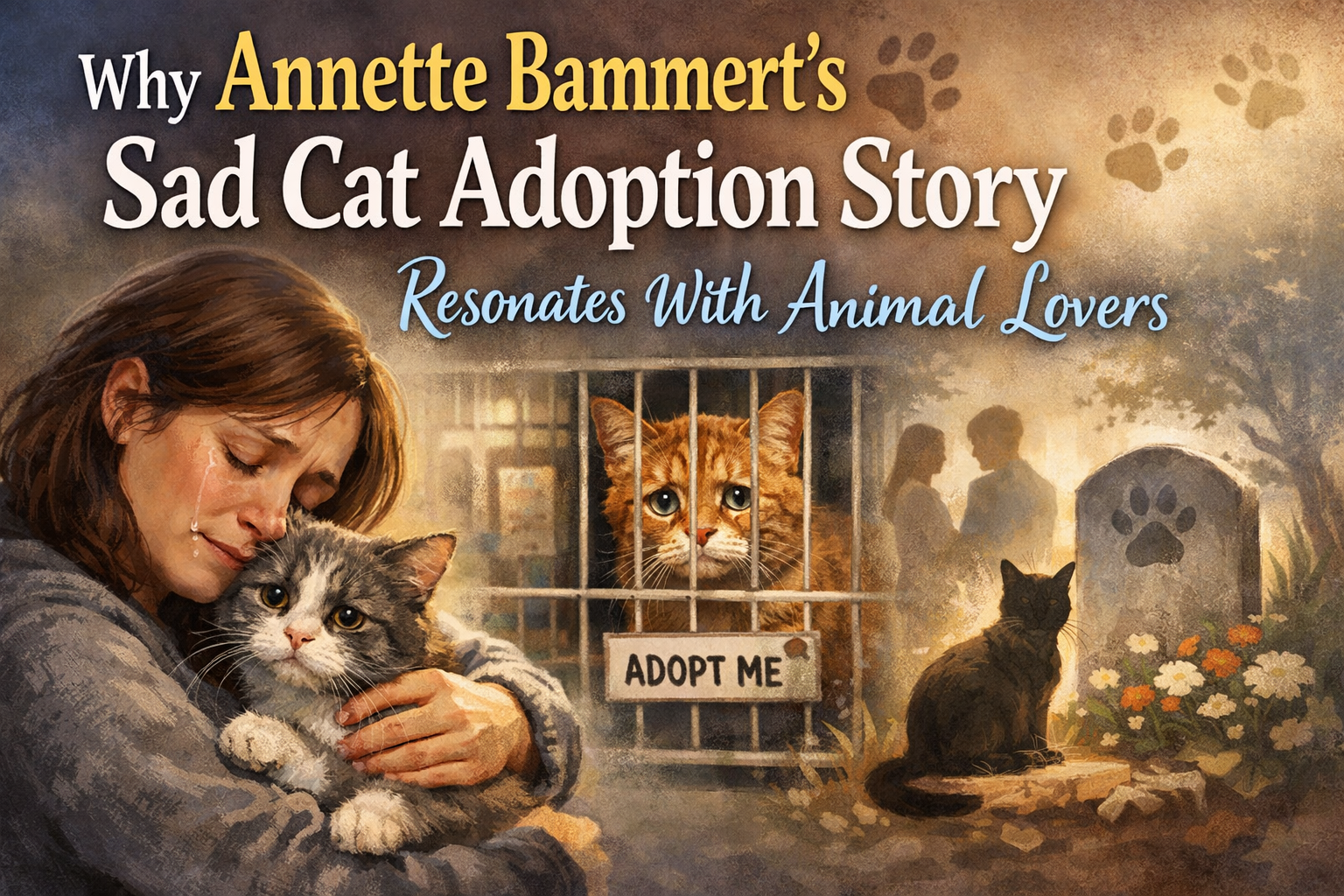
Some animal stories spread because they are dramatic. Others take off because they feel deeply familiar. The story of Annette Bammert and a shelter cat named Lenny falls into the second category. According to reports from Newsweek and Telegrafi, Bammert adopted Lenny after seeing him on a shelter website, where he had already gained a reputation as the “saddest cat in the shelter.” What followed was not an instant fairytale. It was a slower, more believable transformation from a withdrawn cat into a playful, affectionate companion, and that is exactly why so many animal lovers connected with it.
It feels real from the very beginning
A big reason this story resonates is that it does not start with a polished rescue moment. It starts with grief. Newsweek reported that Annette Bammert had recently lost her senior cat, Wilma, before she came across Lenny’s photo on the shelter website. She said he looked as sad as she felt at that moment, which immediately gives the story emotional weight. It is not just about a person saving a cat. It is about two living beings meeting in a moment shaped by loss.
That detail matters because animal lovers tend to respond to stories that feel honest, not overly staged. Many people who have loved pets understand the quiet sadness that can follow the loss of one. Seeing Bammert recognize something of her own pain in Lenny makes the story feel personal and believable. It is less about spectacle and more about connection.
Lenny was not presented as an easy rescue
Another reason the story lands so well is that Lenny was not described as instantly cuddly or ready for a perfect new life. Reports say he was being kept in a separate room because he did not get along with other cats, and when Bammert first brought him home, he hid for days and did not want to be touched. That detail gives the story credibility. People who know rescue animals know that healing rarely happens overnight.
This is where the emotional pull gets stronger. The audience is not just told that Lenny was sad. They are shown the signs of a cat who was fearful, withdrawn, and unsure of people. That kind of behavior is instantly recognizable to many pet owners, especially those who have adopted a shelter cat or other rescue animal. The story reflects the reality that trust has to be earned slowly.
The transformation feels earned
Stories about animals often become memorable when there is a visible before-and-after moment. In Lenny’s case, the transformation was not framed as magic. It was described as the result of time, patience, and care. Newsweek reported that he eventually grew into a bold, playful cat who kept seeking human closeness, while Telegrafi emphasized that his change could be seen not only in his behavior but even in his facial expression.
That is a huge part of the appeal. Animal lovers do not just enjoy happy endings. They love seeing proof that a frightened or heartbroken animal can soften, settle, and start to feel safe. Lenny’s journey from a cat who hid for days to one who climbed tall trees and actively sought affection gives readers that emotional payoff. It feels hopeful without feeling fake.
It taps into the heart of rescue culture
There is also a larger reason this story sticks. It reinforces a belief that many animal lovers already hold close, which is that rescue animals are not broken beyond reach. They may be scared, guarded, or difficult at first, but in the right home they can change in ways that are genuinely moving. The coverage of Annette Bammert and Lenny leans heavily into that idea of a second chance, and readers who care about adoption naturally respond to it.
That emotional framework matters because rescue stories are rarely only about one person and one animal. They often stand in for something bigger. In this case, Lenny becomes a reminder that animals in shelters are often carrying stress, confusion, or grief that cannot be understood at a glance. A cat that seems distant or “sad” in a shelter may look entirely different once he feels safe in a forever home.
The story mirrors what many adopters have lived through
Animal lovers are especially likely to share a story like this because many of them have seen something similar in their own homes. They have watched a nervous dog finally relax. They have seen a cat go from hiding under a bed to sleeping beside them. They know how meaningful tiny milestones can feel when a rescue animal begins to trust again. Lenny’s transformation fits that pattern so well that it almost invites readers to think of their own pets while reading about him. That likely explains why the story spread so easily across Instagram, Facebook, and media coverage beyond the original report.
This familiarity is part of what makes the story stronger than a simple viral pet clip. It is not memorable only because Lenny looked sad. It is memorable because his progress feels emotionally true. The journey from fear to comfort is one many pet owners recognize immediately, even if their own animal had a different backstory.
Annette Bammert comes across as compassionate, not performative
Another reason the story works is the way Bammert is positioned in it. She is not framed as someone chasing attention or trying to stage a rescue narrative for social media. The emphasis stays on her emotional reaction to Lenny, her recent loss of Wilma, and the patience it took to help him settle in. That makes the story feel grounded and human.
Readers tend to trust stories like this more when the person at the center seems motivated by empathy rather than self-display. Bammert’s decision to adopt Lenny reads as a response to genuine emotional recognition. She saw a lonely cat at a moment when she was also carrying sadness, and she made room for him. That is a simple idea, but it is powerful.
It offers hope without pretending everything is easy
One of the smartest things about this story is that it leaves room for difficulty. The reports do not skip over the hard part. They mention the hiding, the hesitation, and the early days when Lenny did not want anyone near him. That honesty makes the ending stronger. People are more moved by progress when they understand what it took to get there.
For animal lovers, that message is deeply reassuring. It says that a scared or withdrawn pet does not need to be fixed instantly to be worth loving. It says patience matters. It says healing can look slow at first. And it suggests that a difficult start does not rule out a joyful future. That is the kind of message people remember, especially if they have ever worried whether a rescue animal would ever fully come out of its shell.
Why stories like this stay with people
At its core, the story of Annette Bammert and Lenny resonates because it blends grief, compassion, patience, and visible transformation in a way that feels deeply human. There is loss in the background, a fragile animal at the center, and a hopeful ending that still feels earned. That combination is hard for animal lovers to ignore.It also reminds readers of something they already want to believe, which is that love and safety can change an animal’s life in ways that are easy to see and impossible to fake. Lenny did not just move into a new house. He seemed to become a different version of himself once he felt secure there. That is why this story continues to strike a chord. It is not only about one sad cat. It is about what a second chance can look like when someone is patient enough to give it.