

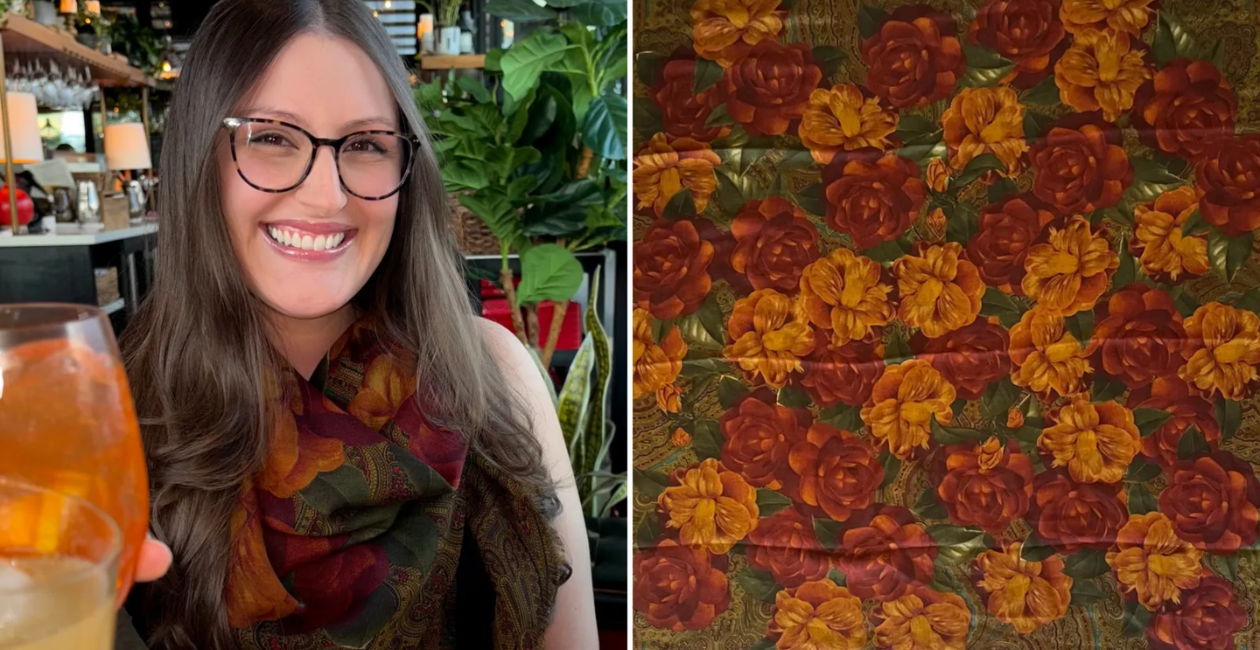
One of the reasons people love thrifting is that it still leaves room for surprise. You can walk into a store looking for something ordinary and walk out with a piece that feels far more special than its price tag suggests. That is exactly what happened when Natalie La Russa found a floral Chanel scarf at Goodwill in Tempe, Arizona for $3.49 and only later realized what she might have picked up.
What makes the story interesting is not only the low price. It is the question that came right after it. Was the scarf actually real?
That is where this kind of thrift find becomes more than a feel-good shopping story. It turns into a lesson in how people spot vintage luxury, how resale value gets judged, and why brand recognition alone is never enough.
The thrill of finding something designer for almost nothing
According to the reporting on La Russa’s find, she loved the scarf’s pattern before she even focused on the label. That detail matters because it says something important about vintage shopping. The best finds usually work on two levels. They feel attractive as objects first, then become even more exciting once you understand what they are.
In this case, the scarf was not treated like some obvious glass-case luxury item. It was sitting in a thrift environment, priced like an everyday accessory. That gap between what something costs and what it might actually be is a huge part of why secondhand shopping keeps people hooked. It is not just about saving money. It is about discovery.
Why a Chanel scarf raises questions so quickly
The moment a thrifted piece carries the name Chanel, the conversation changes. That is partly because Chanel scarves are still an active product category on the brand’s official site, where the house lists scarves, silk scarves, stoles, slim bandeaux, and bandanas as part of its fashion collections. It is also because the resale market is full of vintage Chanel scarves and shawls, with luxury resale platforms featuring logo-detailed pieces, vintage scarves, cashmere stoles, and silk square scarves.
That visibility cuts both ways. It makes a thrifted Chanel scarf exciting, but it also makes it suspect. Highly recognizable luxury accessories are exactly the kind of products that draw copies, lookalikes, and outright counterfeits into the market. The more famous the label, the more careful a buyer has to be. This is one of the main reasons La Russa’s story became an authenticity question almost immediately.
The first lesson is simple: do not judge by the label alone
A logo can catch your attention, but it should not be the only thing convincing you. In the Newsweek story, La Russa said she looked into the scarf more closely after spotting the Chanel marking and started checking details like the logo placement, the material, and the weave. That is a much smarter approach than assuming the tag tells the whole story.
This is where many designer thrift finds go wrong. People either get so excited by the name that they stop looking carefully, or they assume something must be fake simply because it was cheap. Vintage luxury does not work that neatly. A low thrift-store price does not prove authenticity, but it does not disprove it either.
Material matters more than people think
One of the clearest ways to assess a vintage scarf is to pay attention to fabric and feel. The resale pages in your competitor set repeatedly use material language like 100% silk, silk square scarf, cashmere stoles, and vintage scarves and shawls. That kind of wording is not just sales copy. It reflects what matters in the luxury-accessory market.
In La Russa’s case, part of what made the scarf seem promising was the quality of the weave and the overall feel of the piece. When people talk about spotting vintage luxury, this is one of the first real clues. A scarf that feels overly synthetic, rough, or cheaply finished is going to raise doubts fast. A scarf that feels refined, smooth, and carefully made has a better chance of being worth a closer look.
That does not mean every soft scarf is authentic. It means material quality should be part of the process, not an afterthought.
The small finishing details usually tell a bigger story
Luxury accessories often reveal themselves through the little things. For scarves, that usually means looking at the edges, stitching, print quality, and overall finish. Clean finishing tends to signal care in production. Sloppy hems, weak printing, or a fuzzy logo tend to create doubt.
That is one reason vintage scarves are such interesting objects to thrift. They are not just about branding. They are about workmanship. Even a small accessory can show whether a piece was made with precision or whether it only wants to look expensive from a distance.
The Newsweek coverage of this find leaned on exactly that idea by focusing on logo placement, fabric quality, and weave rather than treating the scarf like a simple label story.
Vintage luxury is not only about whether something is real
There is another lesson in this story that gets overlooked. Even before a thrifted piece is fully authenticated, it can still teach you something about vintage taste. La Russa was drawn to the scarf because she liked the floral pattern. That matters. People who build strong vintage wardrobes usually respond to design, color, and texture first. The label is important, but it is not the whole reason an item deserves attention.
That is also why scarves are such interesting thrift finds. They are small enough to buy on instinct, easy to style, and often rich in design detail. Broader fashion coverage this year has also noted a fresh surge of interest in silk scarves and heritage accessories, which helps explain why a vintage Chanel scarf feels especially timely right now.
Resale context helps you understand what you are holding
A good way to think about a thrifted designer piece is to place it in the resale market, not just in the thrift store where you found it. Luxury resale platforms currently list Chanel scarves and shawls as authenticated resale pieces, and the product language often emphasizes vintage status, logo detailing, silk construction, and condition. One example from DBLTKE Luxury Consignment Boutique describes a vintage green-and-gold Chanel silk square scarf with the signature interlocking CC, measuring 38 x 38, in excellent condition, with authenticity guaranteed.
That does not prove any one thrifted scarf is genuine. What it does do is show the vocabulary and quality markers that matter when people assess these pieces. If a thrift-store find seems to line up with the kind of materials, finishing, and design language seen in reputable resale listings, it may deserve more serious attention.
The smartest move is still independent authentication
A thrift-store story can be exciting, but excitement is not authentication. The smartest approach with any high-end vintage find is to get an expert opinion before treating it like a confirmed luxury score. That can mean a reputable consignment expert, a specialist authenticator, or in some cases the brand’s own boutique or service channels.
That advice fits this story especially well because La Russa herself did not stop at the tag. She researched the scarf and compared details before feeling more confident about what she had found.
For shoppers, that is probably the biggest takeaway of all. Spotting vintage luxury is rarely about one clue. It is about several clues lining up at once.
What this Goodwill story really teaches
The reason this story works so well is that it captures both sides of thrifting. There is the emotional side, where finding a possible Chanel scarf for $3.49 feels thrilling on its own. Then there is the practical side, where the real work begins after the find. You check the fabric. You study the logo. You look at the weave. You compare details with trusted resale examples. And if the piece still seems promising, you get it authenticated.
That is what spotting vintage luxury actually looks like in the real world. It is not pure luck, and it is not pure expertise either. It is a mix of curiosity, taste, patience, and careful checking.A thrift-store Chanel scarf is exciting because it suggests the possibility of hidden value. But the real lesson is broader than one label. Vintage luxury reveals itself through quality, construction, and detail. The name gets your attention. The craftsmanship is what earns your trust.