

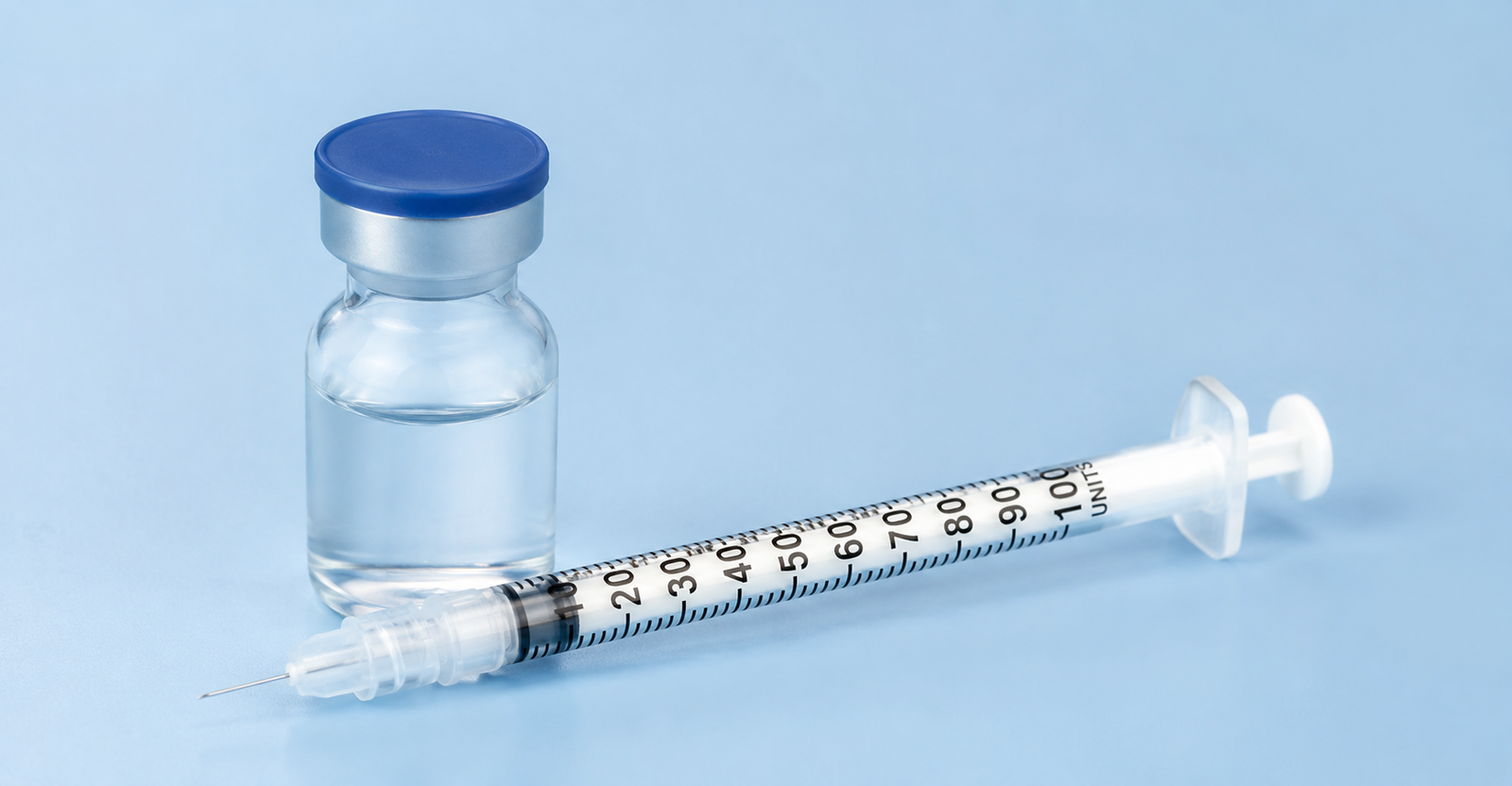
When people search 2.5 mg to units insulin, they are usually trying to understand a confusing dosing instruction. One label may mention 2.5 mg, while a syringe may be marked in units. That makes the question feel simple: 2.5 mg is how many units?
The honest answer is: 2.5 mg does not automatically equal one fixed number of units. It depends on what medication you are using and the concentration written on the vial, pen, or pharmacy label. For insulin itself, prescriptions are normally written in units, not milligrams. For other injectable medications, especially GLP-1 medicines such as tirzepatide or semaglutide, people may use an insulin syringe marked in units, but the medicine dose is still measured in mg.
This is why the same 2.5 mg dose can be 25 units, 50 units, 100 units, or another amount depending on the strength of the liquid.
Quick Answer: How Many Units Is 2.5 mg?
For a U-100 insulin syringe, 100 syringe units equals 1 mL of liquid. Many insulin products are labeled as 100 units/mL, which is why U-100 syringes are marked this way. Official insulin labels list U-100 insulin products as 100 units per mL.
So, for non-insulin injectable medicine measured in mg, the formula is:
Units on a U-100 syringe = dose in mg ÷ concentration in mg/mL × 100
Example:
If the medication concentration is 10 mg/mL:
2.5 mg ÷ 10 mg/mL = 0.25 mL
On a U-100 syringe:
0.25 mL = 25 units
So in that example, 2.5 mg equals 25 units.
But if the concentration is 5 mg/mL, then:
2.5 mg ÷ 5 mg/mL = 0.5 mL
On a U-100 syringe:
0.5 mL = 50 units
That is why the safest answer to how many units is 2.5 mg is: check the concentration first.
Why 2.5 mg and Insulin Units Are Not the Same Thing
A milligram measures weight. It tells you how much active drug is in the dose.
A unit is different. In insulin, units measure biological activity. Insulin labels commonly use unit strength, such as U-100, meaning 100 units in every 1 mL. That is not the same as saying every medication can be converted from mg to units in one universal way.
This matters because many online searches mix together three different things:
2.5 mg dose
mL liquid volume
insulin syringe units
Those three are connected, but they are not identical.
For example, Mounjaro labels include tirzepatide doses such as 2.5 mg/0.5 mL, and Zepbound single-dose vial labeling also lists 2.5 mg/0.5 mL. In that case, 0.5 mL on a U-100 syringe would line up with 50 syringe units. But that only applies to that exact concentration and product setup.
2.5 mg to Units Insulin: The Formula That Makes It Clear
To convert 2.5 mg to units insulin syringe markings, you need two details:
- The dose you want in mg
- The concentration of the medicine in mg/mL
Then use this formula:
Syringe units = mg dose ÷ mg per mL × 100
Here are common examples:
| Medication Concentration | 2.5 mg Equals | U-100 Syringe Units |
| 2.5 mg/mL | 1 mL | 100 units |
| 5 mg/mL | 0.5 mL | 50 units |
| 10 mg/mL | 0.25 mL | 25 units |
| 20 mg/mL | 0.125 mL | 12.5 units |
This is why two people can both ask, “2.5 mg is how many units?” and get different answers. The dose may be the same, but the liquid strength may not be.

Why So Many People Search This for GLP-1 Injections
A lot of confusion comes from tirzepatide, semaglutide, and other injectable medicines that are discussed in mg but sometimes drawn with an insulin-style syringe.
Tirzepatide products may be prescribed in mg doses, such as 2.5 mg, 5 mg, 7.5 mg, and higher strengths. For Mounjaro, the official labeling states that the recommended starting dosage is 2.5 mg injected once weekly, and that this starting dose is for treatment initiation, not intended for glycemic control.
That does not mean every 2.5 mg injection equals the same number of syringe units. The number of units depends on how much medicine is in each mL.
This is also why many medical safety warnings focus on conversion mistakes. The FDA has warned about dosing errors with compounded semaglutide, including cases where people or providers incorrectly converted between milligrams, milliliters, and units, sometimes leading to doses several times higher than intended.
Is 2.5 mg Insulin the Same as 2.5 Units?
No. 2.5 mg insulin and 2.5 units insulin should not be treated as the same thing.
For actual insulin therapy, the prescription usually tells you the dose in units. A person might be told to take 2 units, 10 units, 20 units, or another amount based on their personal treatment plan. That is not the same as converting a 2.5 mg drug dose into insulin units.
If your prescription is for insulin, follow the unit dose written by your doctor or pharmacist. Do not convert insulin from mg by yourself.
If your medication is not insulin but you are using a U-100 syringe, then the syringe “unit” marks are really being used as a volume guide. In that case, the math depends on the medication’s mg/mL concentration.
How to Read a U-100 Syringe for This Type of Conversion
A U-100 syringe is designed around this idea:
100 units = 1 mL
50 units = 0.5 mL
25 units = 0.25 mL
10 units = 0.1 mL
So when someone says “25 units” on a U-100 syringe, that means they are drawing 0.25 mL of liquid. It does not automatically tell you how many mg are inside that liquid.
The mg amount depends on the concentration.
For example:
If the vial says 10 mg/mL, then each 1 mL contains 10 mg.
So 0.25 mL contains 2.5 mg.
That means 25 units would equal 2.5 mg.
But if the vial says 5 mg/mL, then 0.25 mL contains only 1.25 mg.
In that case, you would need 0.5 mL, or 50 units, to reach 2.5 mg.
This is the main point most people miss.
Common Mistake: Thinking “Units” Always Means Insulin Dose
The word units can mean two different things depending on the context.
With insulin, units are the actual prescribed dose.
With another injectable medication drawn into an insulin syringe, units often mean the syringe marking, not the medication’s true medical unit.
That difference is important. A person may say, “I took 25 units,” but for a non-insulin medicine, the clearer statement would be: “I drew 0.25 mL on a U-100 syringe.” Then the mg dose can be calculated from the concentration.
This is also why a GLP-1 dose calculator or pharmacy instruction may ask for concentration. Without concentration, the calculator cannot safely know how many units equal 2.5 mg.
Why the Pharmacy Label Matters More Than Online Charts
Online charts can be helpful for understanding the math, but they cannot replace the exact information on your medication label.
Before converting 2.5 mg to insulin syringe units, check for wording such as:
2.5 mg/0.5 mL
5 mg/mL
10 mg/mL
20 mg/mL
100 units/mL
U-100
If your label says 2.5 mg/0.5 mL, then the full 2.5 mg dose is in 0.5 mL. On a U-100 syringe, that volume is 50 units.
If your label says 10 mg/mL, then 2.5 mg is 0.25 mL. On a U-100 syringe, that is 25 units.
If your label only says 2.5 mg but does not clearly show mL or concentration, ask your pharmacist before measuring anything.
2.5 mg Is How Many Units for Tirzepatide?
For tirzepatide, 2.5 mg can equal different syringe units depending on the product or vial concentration.
For example:
A product labeled 2.5 mg/0.5 mL means 2.5 mg is in 0.5 mL.
On a U-100 syringe, 0.5 mL equals 50 units.
A compounded vial labeled 10 mg/mL would be different.
In that case, 2.5 mg is 0.25 mL, which equals 25 units on a U-100 syringe.
So the answer is not just “2.5 mg equals 25 units” or “2.5 mg equals 50 units.” The correct answer depends on the exact concentration.
2.5 mg Is How Many Units for Semaglutide?
The same rule applies to semaglutide. FDA-approved semaglutide pens, such as Ozempic, are designed to deliver selected mg doses through a pen system rather than asking the user to convert mg into syringe units. Some Ozempic pen labeling describes selectable doses such as 0.25 mg or 0.5 mg from a prefilled pen.
Confusion is more common when people are using vials, especially compounded versions, because they may need to measure liquid with a syringe. That is where mistakes between mg, mL, and units can happen.
For semaglutide, 2.5 mg is not a standard beginner dose in the same way people often discuss 2.5 mg tirzepatide. So before using any conversion, the medicine name, concentration, and prescription instructions must be clear.
Safe Way to Think About 2.5 mg to Units
The safest way to understand 2.5 mg to units insulin is to separate the question into steps:
First, identify the medicine. Is it insulin, tirzepatide, semaglutide, or something else?
Second, read the concentration. Look for mg/mL or mg per 0.5 mL.
Third, convert mg to mL.
Fourth, convert mL to U-100 syringe units.
Here is the simple path:
Dose in mg → liquid volume in mL → syringe units
Not:
mg → insulin units directly
That small difference can prevent a serious dosing error.
Easy Example Using 2.5 mg
Let’s say your medication label says:
10 mg/mL
You need to understand how many units is 2.5 mg.
Step 1: Divide the dose by the concentration.
2.5 mg ÷ 10 mg/mL = 0.25 mL
Step 2: Convert mL to U-100 syringe units.
0.25 mL × 100 = 25 units
So in this example:
2.5 mg = 25 units
Now change only the concentration:
If the label says 5 mg/mL:
2.5 ÷ 5 = 0.5 mL
0.5 mL × 100 = 50 units
So now:
2.5 mg = 50 units
Same dose, different concentration, different syringe mark.
Important Safety Checks Before Measuring Any Injection
Before using any syringe measurement, make sure you know:
The exact medication name
The concentration in mg/mL
The syringe type
The prescribed dose
Whether the medicine should be measured manually at all
Some medications come in pens that are designed to deliver a fixed dose. Some vials are single-dose. Some products say to discard unused portions. For example, some Mounjaro and Zepbound vial labels identify single-dose vials and include instructions such as discarding unused portions.
Never split, transfer, mix, or measure injectable medicine in a way that your prescriber or pharmacist has not instructed.
Best Answer for Google Search Intent
For the keyword 2.5 mg to units insulin, the best answer is:
2.5 mg does not have one universal unit conversion. On a U-100 insulin syringe, the unit amount depends on the medication concentration. If the vial is 10 mg/mL, 2.5 mg equals 25 units. If the vial is 5 mg/mL, 2.5 mg equals 50 units. If the product is labeled 2.5 mg/0.5 mL, then 2.5 mg equals 50 units on a U-100 syringe.
That answer is more accurate than a simple chart because it explains the reason behind the number.
When to Ask a Pharmacist or Doctor
Ask a pharmacist, doctor, or prescribing clinic before injecting if:
The label does not clearly show the concentration.
The instruction says mg, but your syringe shows units.
You are using a compounded medication.
The syringe type is not U-100.
You are unsure whether the dose is 2.5 mg, 0.25 mg, or 25 units.
The vial, pen, or prescription instructions do not match what you were told.
A small misunderstanding can become a large dose difference. That is especially true with concentrated injectable medicines, where a few syringe marks can change the dose significantly.