

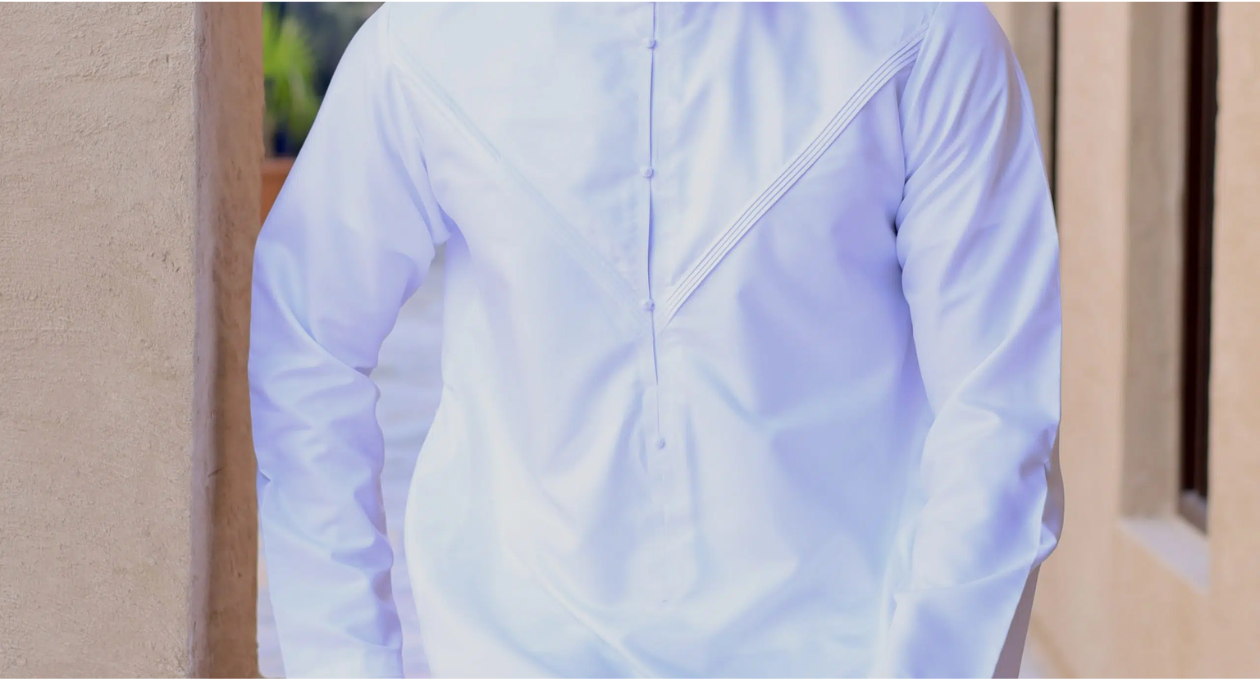
Among the many colours worn across the Muslim world, white holds a special place. Walk into a mosque for Friday prayer in much of the Gulf, and you are likely to see rows of men dressed in white thobes. The preference is noticeable and consistent. While other colours are common, white continues to lead.
A Practical Choice for Hot Climates
Part of this comes down to climate. In hot regions, lighter colours reflect sunlight more effectively than darker shades. A white thobe feels cooler under direct sun, which matters in countries where temperatures regularly rise above 100°F. For men who wear a thobe daily, comfort plays a large role in colour choice. Over time, practicality becomes tradition.
Seasonal habits also play a part. In some regions, darker shades are more common during cooler months, while white dominates in summer. The shift is practical rather than symbolic. Even so, white often remains the default choice throughout the year.
Religious Encouragement
There is also a religious dimension. A well-known hadith records that the Prophet Muhammad encouraged wearing white garments and recommended white cloth for burial shrouds. Scholars generally describe this as recommended rather than obligatory. Even so, that encouragement has shaped cultural habits across centuries. Many men choose white because it aligns with prophetic guidance and carries a sense of spiritual simplicity.
It is important to note that white is not required in Islam. Men are free to wear any modest colour. The prominence of white in certain regions reflects custom as much as faith.
Cleanliness and Presentation
White is often associated with cleanliness. In Islamic practice, personal hygiene is taken seriously. Ablution before prayer is performed several times a day, and clothing is expected to be clean. A white garment shows marks easily, which encourages regular washing and care. In this way, the colour itself reinforces attention to cleanliness.
White also offers a neat and formal appearance. It does not compete for attention or make bold statements. In communal worship, this uniform look can create a sense of equality. When men stand shoulder to shoulder in similar dress, social differences appear less visible.
A Symbol of Tradition
In many Gulf countries, white has become closely linked to national dress. In Saudi Arabia, Qatar, the UAE and Kuwait, the white thobe is common in offices, government buildings and public events. It has moved beyond religious use and into daily life. In these settings, white represents continuity and shared identity.
The lasting popularity of white thobes comes down to a combination of factors. They suit the climate, reflect prophetic encouragement, signal cleanliness and fit naturally into formal settings. Their appeal is steady rather than dramatic. For many men, choosing white is simply part of everyday life.