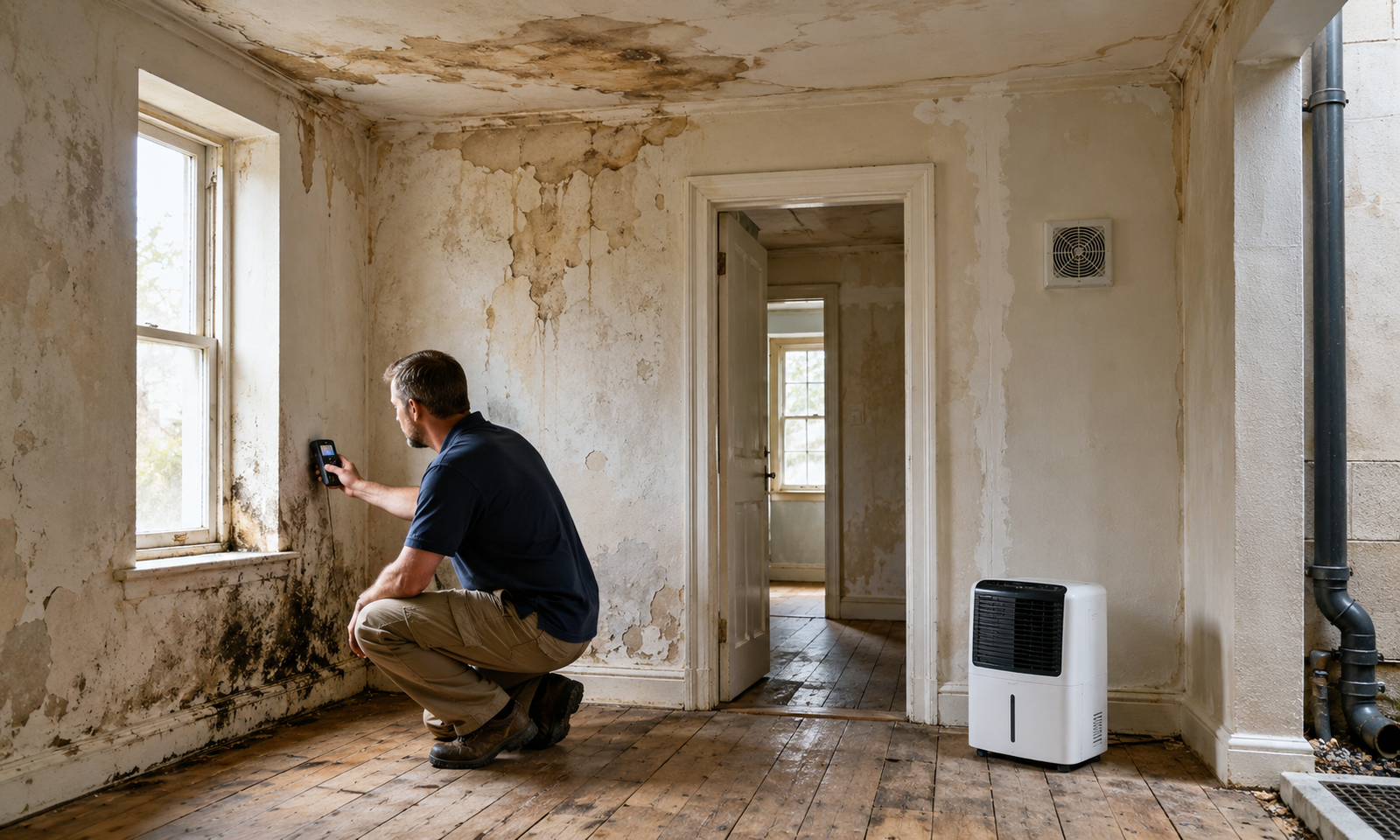

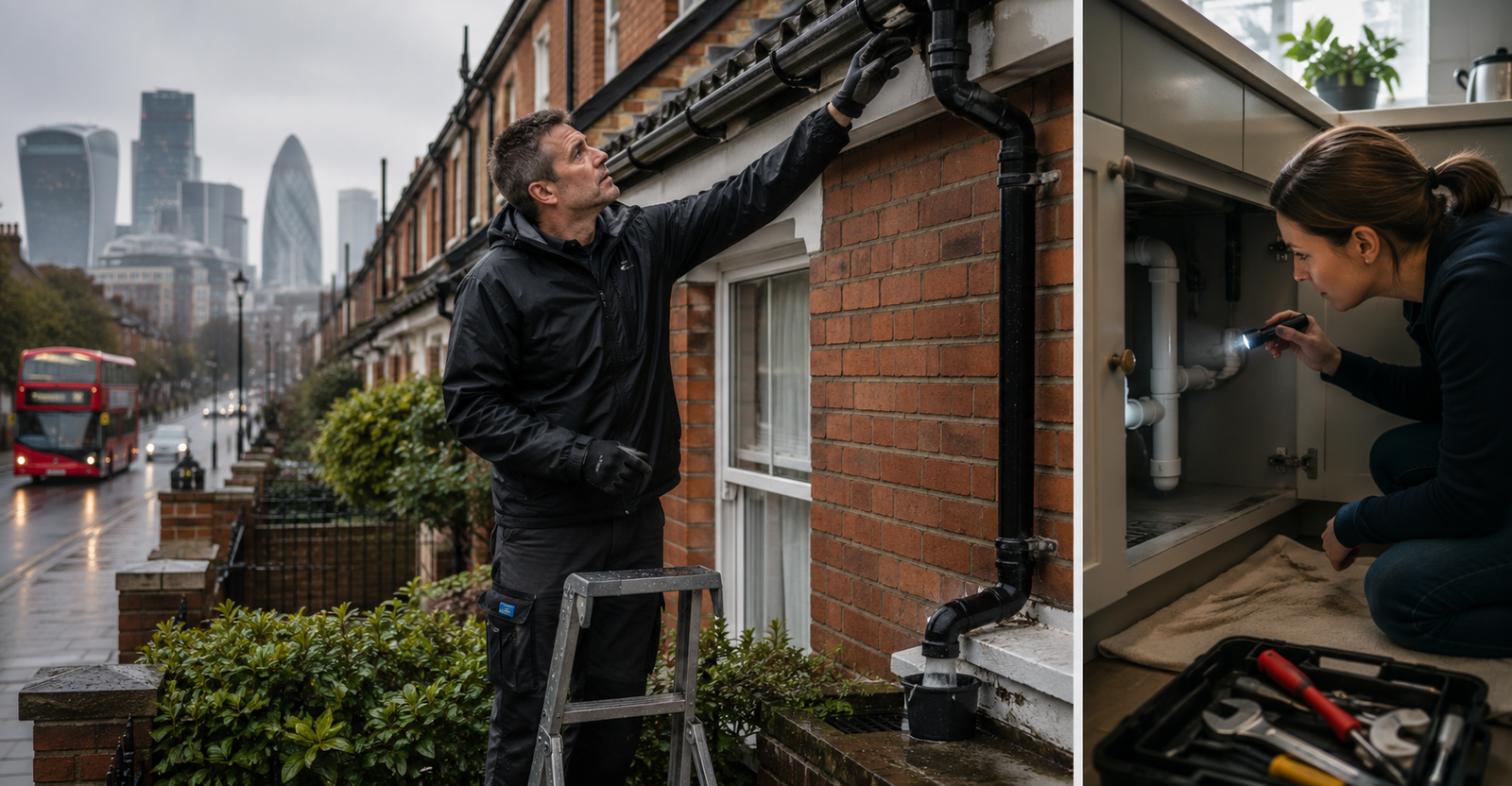
If you own a home in London, water damage is one of the biggest financial risks you face. Damp walls, rising damp, condensation mould, and basement flooding are problems that affect tens of thousands of properties across the capital every year. The older the property, the higher the risk. Many London homes were built over a hundred years ago, and their original waterproofing systems have either deteriorated or were never adequate by modern standards. What starts as a small damp patch on a wall or a musty smell in a basement can turn into a repair bill running into thousands of pounds if left alone. This guide explains the causes, warning signs, and practical steps you can take to protect your home.
Key Takeaways
- Water damage in London homes is most commonly caused by rising damp, penetrating damp, condensation, or basement water ingress.
- London properties built before 1919 are at the highest risk due to aging or absent damp-proof courses.
- Structural timber in damp conditions can develop dry rot, wet rot, or woodworm infestation.
- Black mould from condensation is a health hazard linked to breathing problems and allergic reactions.
- Professional diagnosis is more reliable than guessing the source of damp, because different types need different treatments.
The Real Cost of Water Damage in London
Water damage is not just an inconvenience. It is a property value issue, a health issue, and in some cases a structural safety issue.
According to the Association of British Insurers, water damage is the most common cause of home insurance claims in the UK, with escape of water claims alone costing the industry over 1.8 million pounds every day. In London, where property values are high, even moderate water damage to walls, floors, and timbers can reduce the market value of a home significantly.
Beyond the financial cost, the health impact of damp and mould should not be underestimated. The NHS advises that living in a damp home increases the risk of respiratory illness, asthma flare-ups, and allergic reactions. Children, elderly people, and those with existing health conditions are most at risk.
What Causes Water Damage in London Homes
London has specific conditions that make its housing stock more vulnerable to moisture problems than properties in many other parts of the country.
Clay soil: Much of London sits on London Clay, a soil type that holds water rather than draining it away. After heavy rain, this soil stays saturated for long periods and puts sustained pressure on the walls and foundations of any property built on top of it.
High groundwater table: In many London boroughs, the groundwater table sits relatively close to the surface. Areas near the Thames and its tributaries are particularly affected. This means below-ground spaces like basements, cellars, and lower ground floor flats face a near-constant risk of water ingress.
Old building stock: London has more pre-1919 housing than almost any other major city in the UK. These older properties often have solid brick walls with no cavity, no modern damp-proof course, and no insulation. They are structurally beautiful but inherently more vulnerable to moisture.
Dense urban layout: London’s tightly packed terraced houses and converted flats share walls, rooflines, and drainage systems. A leak or moisture problem in one unit can travel into an adjacent property, and poor maintenance by one neighbour can affect the properties on either side.
The Main Types of Water Damage to Know About
Not all damp is the same. Using the wrong treatment for the wrong type of damp is a very common and costly mistake. Here is how to tell them apart.
Rising Damp
Rising damp happens when water from the ground is drawn upward through the brickwork of a wall by a process called capillary action. It typically appears as a line of staining, usually no higher than one metre from the floor, with white powdery deposits on the wall surface called efflorescence. These salts are left behind as the water evaporates.
Rising damp is caused by a failed, damaged, or absent damp-proof course. It will not go away on its own and gets steadily worse over time, damaging plaster, paint, and eventually the structural integrity of the wall.
Penetrating Damp
Penetrating damp enters a building through the exterior fabric of the structure rather than rising from the ground. It can come through cracked or porous brickwork, failed pointing between bricks, damaged rendering, gaps around window frames, broken roof tiles, or blocked and leaking gutters.
Unlike rising damp, it can appear at any height on a wall. The characteristic sign is a damp patch that gets larger or more visible after heavy rainfall and dries out again in dry weather.
Condensation and Mould
Condensation is the most widespread form of damp in London homes today. It happens when warm, moisture-laden air inside a property meets a cold surface and the water vapour condenses into liquid droplets. In poorly ventilated homes, this water settles on walls, ceilings, and window frames, creating conditions for black mould to grow.
Cooking, bathing, drying laundry indoors, and even breathing all add moisture to the air. In a well-ventilated home, this moisture escapes. In a tightly sealed home with no airflow, it accumulates until surfaces become saturated.
Basement and Below-Ground Water Ingress
Basements and lower ground floor spaces in London are at particular risk from water entering through the floor slab, through the base of walls, or through gaps where service pipes pass through the structure. During periods of sustained rain or when the groundwater table rises, these spaces can fill with water rapidly.
A simple paint sealant applied to basement walls is not a permanent or effective solution for this type of water ingress. A structural waterproofing system designed by a qualified specialist is the correct approach.
Warning Signs You Should Never Ignore
| Warning Sign | What It Could Mean |
| Tide marks or staining on lower walls | Rising damp |
| White powdery deposits on brickwork | Rising damp with salt crystallisation |
| Damp patches that appear after rain | Penetrating damp |
| Black mould in corners or on ceilings | Condensation |
| Soft or spongy floorboards | Wet rot or dry rot in structural timber |
| Small round holes in timber | Woodworm infestation |
| Musty smell in basement or cellar | Water ingress or fungal decay |
| Water on basement floor after rain | Structural waterproofing failure |
If you notice more than one of these signs at the same time, the underlying moisture problem is likely more advanced than it appears on the surface.
How to Reduce the Risk: Practical Steps for London Homeowners
There are a number of things you can do yourself to reduce the risk of water damage without waiting for a professional survey.
Outside the property:
Check gutters and downpipes twice a year, once in autumn after leaves have fallen and once in spring. Blocked gutters overflow and direct large amounts of water down the outside of walls, which eventually finds its way inside.
Inspect the pointing between bricks on external walls. Crumbling or missing mortar creates gaps that water enters directly. Repointing damaged areas is a relatively affordable job for a builder and prevents much more expensive water damage further down the line.
Make sure the ground immediately around your property slopes away from the building rather than toward it. Water pooling against a wall will eventually find a way through.
Inside the property:
Run extractor fans when cooking and showering, and leave them on for a few minutes after you finish to clear residual moisture from the air. If your bathroom or kitchen does not have a working extractor fan, fitting one is one of the most cost-effective things you can do to reduce condensation.
Open windows briefly each morning to allow fresh air in and damp air out, even in cold weather. Ten minutes of ventilation can make a significant difference to the moisture level inside a room.
Check under sinks, around bath edges, and behind washing machines regularly for slow leaks. A dripping joint under a kitchen sink can saturate the wall behind a unit for months before any visible sign appears.
In the basement or cellar:
Check the space after heavy rain to see whether any water is entering. Look at the base of walls and the floor for damp patches, standing water, or tide marks. If you find evidence of water entry, have a structural survey carried out before investing in any cosmetic work in that space.
When DIY Is Not Enough
Most moisture problems in London homes are beyond what a homeowner can fix with paint, filler, or ventilation improvements alone. A failed damp-proof course needs to be chemically reinstated by a qualified contractor. A leaking basement needs a professionally designed drainage and membrane system. Dry rot in structural timbers needs to be removed, the surrounding material treated, and the timber replaced by specialists.
This is where working with London moisture control experts matters. Crown Preservation has been treating damp, timber decay, and waterproofing problems in London and the Home Counties for over 30 years. They carry out a full diagnosis of the property before recommending any treatment, which means you are not paying for a solution to the wrong problem. All of their treatments are backed by a 30-year insurance-backed guarantee, providing long-term protection regardless of what happens to the business in the future.
What a Professional Damp Survey Includes
If you book a survey with a qualified company, here is what it should cover:
- Full inspection of all affected walls, both internal and external
- Identification of the type of damp and its source
- Assessment of whether the damp-proof course is present, intact, and functioning
- Inspection of all accessible timber for signs of rot, fungal decay, or woodworm
- Assessment of any below-ground or basement spaces
- Written report with findings and recommended treatment options
- No obligation quote for any work required
A proper survey gives you the information you need to make a decision rather than guessing and spending money on the wrong treatment.
Treatment Options Explained
Chemical damp-proof course injection: A specialist drills a series of holes along the base of an affected wall and injects a damp-proof cream or fluid that creates a new moisture barrier. This is the standard treatment for rising damp where the original DPC has failed.
Structural waterproofing for basements: A cavity drain membrane is fixed to the walls and floor of a basement, directing any water that enters into a sump and pump system that removes it automatically. This is a permanent and reliable solution for below-ground water ingress.
Ventilation systems for condensation: Positive input ventilation (PIV) units or mechanical ventilation with heat recovery (MVHR) systems replace damp internal air with filtered external air, reducing condensation at source rather than just treating the symptoms.
Timber treatment for rot and woodworm: Affected wood is removed, the surrounding area is treated with fungicide or insecticide, and replacement timbers are installed and pre-treated to prevent recurrence.
Frequently Asked Questions
How do I know if I have rising damp or condensation?
Rising damp appears as a horizontal band of staining at the base of walls, usually with white salt deposits and crumbling plaster. Condensation typically shows as black mould patches on wall surfaces, particularly in corners and near windows, and worsens in rooms with poor air circulation. A professional survey will give you a definitive answer because both problems look similar to the untrained eye and require completely different treatments.
Will a dehumidifier fix my damp problem?
A dehumidifier can help manage the symptoms of condensation by removing moisture from the air, but it will not fix the underlying cause. If the source of the moisture is rising damp, penetrating damp, or water ingress through a basement wall, a dehumidifier will have no effect on the root problem.
How quickly can damp cause structural damage?
It depends on the type and severity of the damp. Rising damp can soften plaster and damage decorations within months. Sustained moisture in timber can lead to dry or wet rot within one to two years under the right conditions. Basement flooding can compromise floor slabs and wall structures much more quickly in serious cases. The general rule is that the sooner a moisture problem is identified and treated, the lower the cost of putting it right.
Does home insurance cover damp damage?
Most standard home insurance policies in the UK do not cover damage caused by gradual damp, rising damp, or condensation. These are classified as maintenance issues rather than sudden events. Flood damage from an extreme weather event is typically covered, but the slow, progressive damage from rising or penetrating damp is usually the homeowner’s responsibility.
How long does damp proofing treatment last?
A properly installed chemical damp-proof course should last for the lifetime of the building. Crown Preservation backs their treatments with a 30-year insurance-backed guarantee, which gives homeowners long-term assurance that if the treatment fails within that period, it will be rectified at no additional cost.
Final Thoughts
Water damage in a London home is rarely sudden. It builds quietly over months or years before the visible signs appear. By the time most homeowners take action, the problem has usually spread further than it looks on the surface.
The most cost-effective approach is consistent maintenance outside the property, good ventilation habits inside, and a professional survey at the first sign of anything that does not look right. Catching moisture problems early keeps repair costs manageable and protects both the structure and the long-term value of your home.