

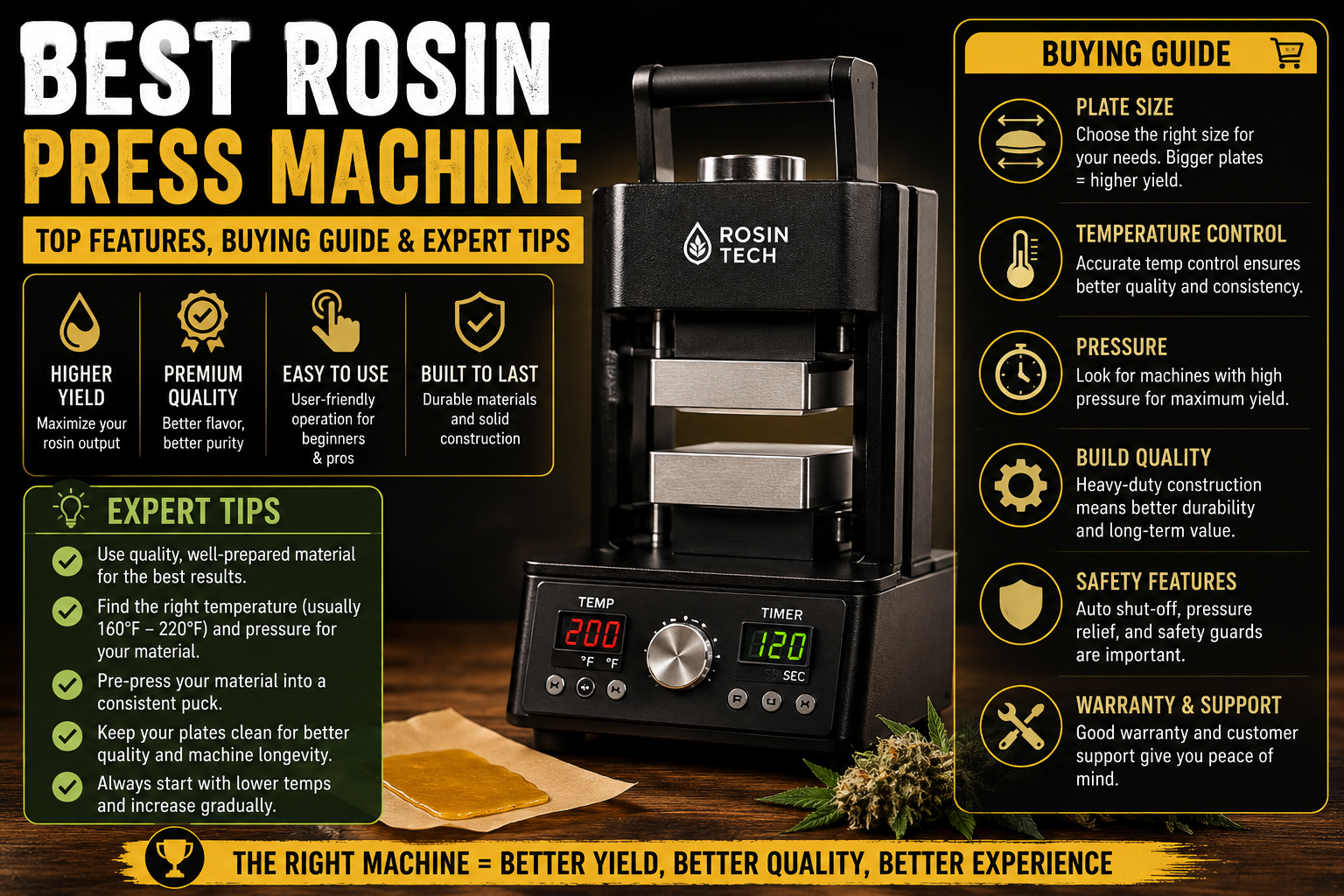
Choosing the best rosin press machine is not only about buying the most powerful press you can find. A good machine should be safe, consistent, easy to control, and matched to your actual use. For legal hemp, botanical, or licensed solventless extraction work, the right rosin press can make the process more controlled and repeatable, while the wrong one can waste material, create uneven pressure, or become frustrating after a few uses.
A rosin press is a heated press that uses controlled pressure and heated plates. Most modern rosin presses are sold as manual, hydraulic, pneumatic, electric, or hybrid systems. Brands such as NugSmasher, Dabpress, and Lowtemp Industries position their machines around different user levels, from small personal presses to modular commercial equipment. NugSmasher promotes a lifetime warranty for original purchasers, while Dabpress lists a lifetime warranty for press frames and one-year coverage for heating rods, PID controllers, pressure systems, and hydraulic hand pumps.
What Makes the Best Rosin Press Machine?
The best rosin press machine is the one that gives you stable heat, even pressure, safe operation, and enough capacity for your needs without being oversized. Bigger is not always better. A beginner with small batches may be happier with a compact manual or small hydraulic press. A regular producer may need a stronger frame, larger plates, a pressure gauge, and better temperature stability.
The main things to compare are:
Plate size
Press type
Pressure control
Temperature accuracy
Frame strength
Ease of use
Safety features
Warranty and support
Replacement parts availability
A good rosin press should feel controlled, not unpredictable. You want smooth pressure, accurate heat, and a frame that does not flex under load.
Manual, Hydraulic, Pneumatic, or Electric Rosin Press?
Before choosing a machine, understand the main press types.
Manual Rosin Press
A manual rosin press is usually the most beginner-friendly and affordable option. It uses a hand crank, lever, or twist mechanism. These machines are simple, compact, and easier to store.
Manual presses are best for people who want a small setup, occasional use, and lower maintenance. The downside is that pressure control may be less precise, and larger batches can be tiring.
Hydraulic Rosin Press
A hydraulic rosin press uses a hydraulic jack or pump to create more force with less physical effort. This style is popular because it offers stronger pressure and better control than many basic manual units.
Hydraulic presses are a solid middle ground for serious home users and small-scale operators. Dabpress, for example, sells hydraulic press machines and pump systems, including high-pressure hand pumps designed for 10-ton and 12-ton press machines.
Pneumatic Rosin Press
A pneumatic rosin press uses air pressure, usually from an air compressor. It can be easier on the hands and more consistent for repeated use. This style is often better for users who need smoother workflow and repeatable results.
The downside is that pneumatic systems require extra equipment and space.
Electric Rosin Press
An electric rosin press is designed for convenience. Instead of pumping or cranking, the machine applies pressure through an electric mechanism. This can be useful for people who want a cleaner, more automated process.
Electric presses often cost more, but they may reduce guesswork and physical effort.
Plate Size: Why It Matters
Plate size is one of the most important features in a rosin press. Smaller plates are fine for personal use and small batches. Larger plates are better for more material and more even coverage, but they need enough frame strength and pressure to work properly.
Common plate sizes include:
2×3 inches for small personal use
3×5 inches for home and hobby setups
4×7 inches for larger batches and advanced users
Larger custom plates for commercial or modular systems
Lowtemp Industries describes its V2 Rosin Press with 3×5 and 4×7 plate options, positioning it more toward commercial labs, caregivers, boutique hash makers, and scaling solventless operations.
For most beginners, a medium plate size is easier to manage than a very large setup. Large plates only help if the rest of the machine can deliver even pressure across the full surface.
Temperature Control and Heat Stability
A strong press is not useful if the heat is unstable. The best rosin press machine should have reliable temperature control, ideally with a digital controller or PID system. This helps keep the plates steady instead of swinging too hot or too cool.
Look for:
Dual heated plates
Digital temperature display
Independent plate heating
Consistent heat across the plate surface
Quality heating rods or heating elements
Dabpress lists heating rods and PID controllers as specific covered parts in its warranty policy, which shows how central these components are to press performance and maintenance.
A good machine should heat evenly and hold its setting well. Uneven heat can create inconsistent results and make the machine harder to trust.
Pressure: More Is Not Always Better
Many buyers look only at tonnage: 2-ton, 4-ton, 6-ton, 10-ton, 12-ton, or 20-ton. But higher tonnage does not automatically mean a better rosin press.
What matters is usable pressure, plate size, control, and even application. A small press with accurate pressure can be better than a huge press that is hard to control. Too much force can also damage material, create blowouts, or make the process less predictable.
A pressure gauge is useful because it gives you feedback instead of relying only on feel. NugSmasher’s owner manual explains gauge pressure as the hydraulic ram’s fluid pressure and notes that applied pressure should be understood in relation to surface area.
For a buying guide, the key advice is simple: choose controllable pressure, not just maximum pressure.
Build Quality and Frame Strength
A rosin press needs a strong frame. If the frame flexes, bends, or feels unstable, pressure may not apply evenly. A sturdy steel frame, well-machined plates, quality welds, and reliable hardware all matter.
Look for:
Solid steel construction
Stable base
Smooth plate alignment
Minimal frame flex
Replaceable parts
Good customer support
Lowtemp Industries highlights modular design, customizable setups, and the ability to send back individual parts for maintenance. That kind of serviceability can matter for users who plan to keep equipment for years.
A cheaper machine may look attractive at first, but weak frames, poor alignment, and unreliable electronics can cost more in the long run.
Best Rosin Press Machine for Beginners
For beginners, the best choice is usually not the largest or most expensive machine. A beginner-friendly rosin press should be simple, safe, compact, and easy to control.
Good beginner features include:
Small to medium plate size
Clear digital temperature display
Stable frame
Simple pressure system
Easy storage
Good instructions
Reliable warranty
A small manual or compact hydraulic press often makes sense for first-time users. It allows you to learn the machine without investing in a large commercial setup.
Avoid very cheap machines with unclear specs, weak frames, poor reviews, or no warranty. If a brand does not clearly explain the plate size, heating system, warranty, or replacement parts, that is a warning sign.
Best Rosin Press Machine for Home Use
For home use, a 6-ton to 12-ton hydraulic press is often more than enough for many users, depending on plate size and batch needs. The goal is a balance between power and control.
A good home-use machine should have:
3×5 plates or similar medium plates
Hydraulic pressure control
Digital heat controller
Compact footprint
Strong frame
Safe, simple operation
Good support from the seller
Dabpress and NugSmasher are often discussed in this category because they offer machines aimed at personal and small-scale use, with different price points and pressure options. NugSmasher also emphasizes warranty confidence as part of its product positioning.
Best Rosin Press Machine for Commercial Use
Commercial users need more than basic pressure. They need repeatability, durability, serviceability, and workflow efficiency.
Important commercial features include:
Larger plates
Heavy-duty frame
Accurate pressure monitoring
Reliable heating system
Fast recovery time
Modular parts
Strong warranty
Easy maintenance
Scalable setup
Lowtemp Industries markets American-made rosin presses for commercial operators and describes modular systems that can expand over time, including configurations that connect multiple presses for operation by one employee.
For a commercial setup, the cheapest machine is rarely the best choice. Downtime, uneven output, and weak support can be more expensive than buying better equipment from the start.
Features That Separate Good Presses From Cheap Presses
A low-cost rosin press may be fine for occasional small use, but there are signs of better quality.
A better machine usually has:
Thicker, well-machined plates
Stable temperature control
Even plate alignment
Pressure gauge or repeatable pressure system
Strong frame with little flex
Clear warranty terms
Replacement parts
Positive long-term user feedback
Responsive customer service
Cheap machines often cut corners on electronics, frame quality, heat consistency, and plate alignment. Those problems may not show up in product photos, so reviews and warranty details matter.
Rosin Press Safety Tips
A rosin press uses heat and force, so safety should be part of the buying decision. Look for a machine that feels stable and has enough space around the plates to reduce accidental burns or pinching.
Basic safety points include:
Use only where legally allowed.
Follow the manufacturer’s instructions.
Keep hands away from heated plates.
Avoid loose clothing near moving parts.
Place the machine on a stable surface.
Do not exceed the machine’s rated pressure.
Let plates cool before cleaning or moving.
Keep children and pets away from the machine.
This article is a buying guide, not an instruction manual for producing any controlled substance. Laws vary by location, so buyers should check local rules before purchasing or using any extraction equipment.
Warranty and Customer Support Matter
A rosin press is not a throwaway tool. Heat controllers, hydraulic systems, pressure gauges, heating rods, plates, and frames can all need support over time. This is why warranty terms should be part of your buying decision.
NugSmasher states that it warranties all presses with a lifetime warranty on parts and labor for the original purchaser, excluding misuse or abuse. Dabpress lists lifetime coverage for the rosin press frame and one-year coverage for several key components, including heating rods, PID controllers, pressure systems, and hydraulic hand pumps.
Before buying, check:
Who pays shipping for warranty service
Whether electronics are covered
Whether hydraulic parts are covered
How long the warranty lasts
Whether the warranty transfers to a second owner
How easy it is to contact support
Mistakes to Avoid When Buying a Rosin Press
One common mistake is buying based only on tonnage. A huge pressure rating does not help if the plates are poorly aligned or the heat is unstable.
Another mistake is buying a machine that is too small or too large. Too small can become frustrating quickly. Too large can be expensive, bulky, and unnecessary.
Also avoid ignoring warranty details. If a press fails and the seller does not offer parts or support, the low purchase price may not feel like a bargain anymore.
The biggest buying mistakes are:
Choosing tonnage over control
Ignoring plate size
Buying without checking warranty
Choosing poor-quality electronics
Overpaying for features you do not need
Buying from unclear or unsupported sellers
Best Choice by User Type
For a beginner, the best rosin press machine is usually a compact manual or small hydraulic press with simple controls and a strong frame.
For regular home use, a medium hydraulic press with good plate alignment, digital heat control, and a pressure gauge is usually the strongest value.
For professional or licensed commercial use, a modular, serviceable press with larger plates, reliable electronics, pressure feedback, and strong warranty support is the smarter investment.
For budget buyers, focus on safety, plate alignment, heat stability, and real support instead of chasing the lowest price.
Buying Checklist Before You Choose
Before buying a rosin press, ask yourself:
Is this machine legal for my intended use where I live?
What plate size do I really need?
Do I want manual, hydraulic, pneumatic, or electric pressure?
Does it have accurate temperature control?
Is the frame strong enough for repeated use?
Does the brand offer a clear warranty?
Can I get replacement parts?
Is the machine easy to store and clean?
Are real users satisfied after months of use?
The best rosin press machine is not the same for everyone. A compact press may be perfect for one person, while another needs a commercial-grade modular system. The smartest choice is the machine that fits your legal use case, budget, workflow, safety needs, and long-term support expectations.