

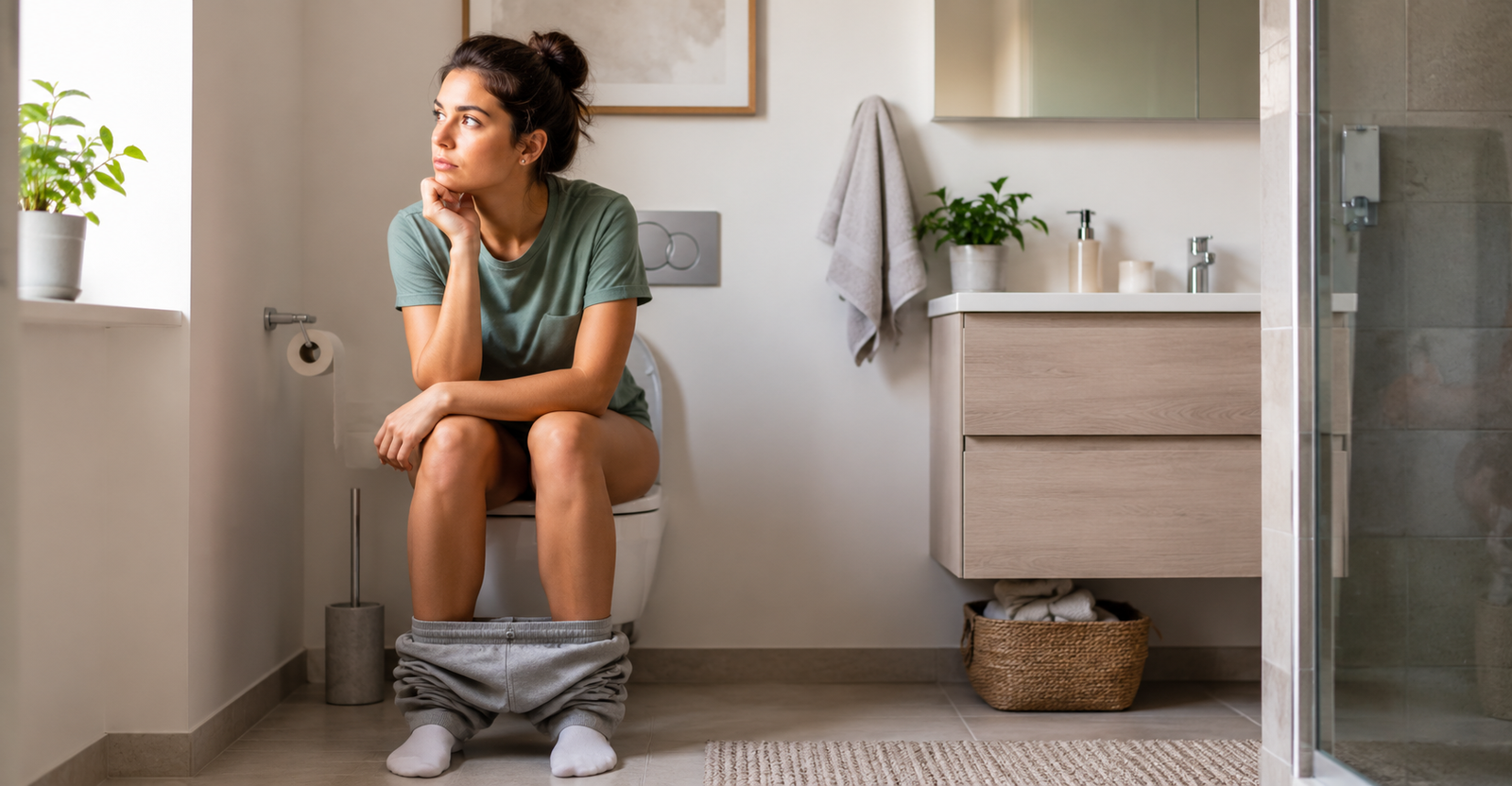
If you have ever wondered why do you pee when you poop, you are definitely not the only one. It feels like a strange body habit, but in most cases it is completely normal. The short answer is that peeing and pooping use nearby muscles, nerves, and pelvic floor control, so when your body relaxes enough to pass stool, it often becomes easier to pass urine too.
That does not mean something is wrong. For many people, poop and pee at the same time simply because the bladder already has urine in it, the pelvic floor relaxes, and sitting on the toilet gives the body a “go ahead” signal.
Why Do You Pee When You Poop?
You often pee when you poop because the bladder, bowel, pelvic floor muscles, and sphincters work in the same lower part of the body. The pelvic floor supports the bladder and rectum, and it helps control both urination and bowel movements. Cleveland Clinic explains that pelvic floor dysfunction can affect both peeing and pooping because these muscles must relax and coordinate properly for bathroom function.
When you sit down to poop, your body usually relaxes the muscles around the rectum and anus. At the same time, the pelvic floor relaxes more broadly. If your bladder has urine inside, that relaxed position can make it easier for urine to come out too.
So the plain answer to why do you pee when you poop is:
Your body relaxes the pelvic area to pass stool, and that relaxation can also allow urine to pass.
Can You Pee and Poop at the Same Time?
Yes, you can pee and poop at the same time. It is common, especially when your bladder is partly full. Some people pee first, then poop. Some poop first, then pee. Others pass both around the same time.
A popular explanation is that urination and defecation are controlled by sphincter muscles. The external sphincters are partly under voluntary control, and relaxing the pelvic floor for bowel movement can make urination easier too. Science Focus explains that people can often urinate without pooping because the urethral sphincter is smaller and can relax without relaxing the whole pelvic floor, while bowel movements usually require broader pelvic floor relaxation.
That is why urinating and defecating at the same time can happen naturally, but peeing by itself is often easier than pooping by itself.
Why Pooping Often Triggers Peeing
A bowel movement is not just one muscle working. Your rectum fills, your brain receives the signal, your pelvic floor relaxes, and abdominal pressure may increase slightly as stool moves out.
That pressure can also affect the bladder. The bladder and bowel sit close together, and changes in one area can influence the other. Johns Hopkins Medicine notes that bladder and bowel problems may happen together, and bladder or bowel incontinence means difficulty holding urine or stool.
This close connection is also why constipation can affect urination. When stool builds up, the colon can press on the bladder and make urinary symptoms worse. Urology Care Foundation states that bladder health is linked to bowel health, and bladder leaks may worsen when a person is constipated.
The Pelvic Floor Is the Main Reason
The pelvic floor is a group of muscles that sits like a support hammock under the bladder, rectum, and other pelvic organs. These muscles help you hold urine and stool, but they also need to relax when it is time to go.
When you poop, your pelvic floor should relax. If urine is already waiting in the bladder, that same relaxation may let pee flow as well.
This is why peeing and pooping at the same time is usually not a sign of poor control. It is often a sign that the pelvic floor is doing what it is supposed to do: relaxing during elimination.
Is It Normal to Poop and Pee at the Same Time?
Yes, in most cases, it is normal. It is especially common when:
You have not peed for a while.
Your bladder is already full.
You are sitting comfortably on the toilet.
You are having a normal bowel movement.
You naturally relax your pelvic floor when you poop.
You drink enough fluids and urinate regularly.
It is not something you need to “fix” unless it comes with pain, leakage, sudden loss of control, constipation, urinary urgency, or other new symptoms.
Why Can You Pee Without Pooping, But Often Pee When You Poop?
This is the part that confuses many people. You can usually pee without pooping because urination needs less pelvic floor relaxation than a bowel movement. The body can release urine through the urethra while the anal sphincter stays closed.
Pooping often requires more complete relaxation around the rectum and pelvic floor. Once that larger relaxation happens, the bladder may empty too if it contains urine.
So, can you pee and poop at the same time? Yes. But you do not always have to. If your bladder is empty, you may poop without peeing much or at all.
Does This Mean Your Bladder and Bowel Are Linked?
Yes, they are linked in a practical way. They are separate systems, but they sit close together and share pelvic support. Nerves, muscles, pressure, posture, and bathroom habits can affect both.
NIDDK notes that pelvic floor exercises can help keep pelvic floor muscles strong and support healthy bladder and bowel function.
This is also why doctors often ask about both bowel habits and urinary symptoms. Someone with constipation may also notice urinary urgency. Someone with pelvic floor tension may have trouble emptying the bowel and bladder properly.
When Peeing While Pooping May Be More Noticeable
You may notice it more during certain situations:
After drinking a lot of water or caffeine
A full bladder makes it more likely that urine will come out during a bowel movement.
During constipation
Straining and stool buildup can increase pressure around the bladder.
With diarrhea or urgent bowel movements
The body may relax quickly and strongly, causing both urine and stool to pass close together.
During pregnancy or after childbirth
Pelvic floor muscles may be stretched or weakened, which can affect bladder and bowel control.
With aging or pelvic floor weakness
Weaker pelvic muscles can make urine leakage more likely during pressure changes.
NIDDK explains that weak pelvic floor muscles can contribute to urinary leakage and may also be linked with bowel control problems.
What If You Cannot Pee and Poop Normally?
Occasional bathroom changes are common, but ongoing difficulty may point to pelvic floor dysfunction, constipation, urinary retention, or another medical issue.
Cleveland Clinic describes pelvic floor dysfunction as trouble relaxing and coordinating pelvic floor muscles to pee or poop. Symptoms can include constipation, straining, frequent bathroom trips, urine leakage, stool leakage, painful urination, or pelvic pain.
You should not ignore symptoms like:
Trouble starting urination
Weak urine stream
Feeling like the bladder does not empty
Needing to strain hard to poop
Pain with urination or bowel movements
Accidental urine leakage
Accidental stool leakage
Ongoing constipation
Pelvic, rectal, or lower back pain
These symptoms do not always mean something serious, but they are worth discussing with a healthcare professional if they continue.
Is It Bad to Push Hard When You Poop or Pee?
A little natural pressure during a bowel movement can happen, but heavy straining is not ideal. Straining can worsen constipation, irritate hemorrhoids, and put extra pressure on the pelvic floor.
For urination, it is better to relax and let urine flow rather than force it out. If you often need to push to pee, that may mean your bladder is not emptying normally, your pelvic floor is too tense, or there is another issue.
A healthier bathroom routine includes:
Sitting comfortably
Relaxing your belly and pelvic area
Breathing slowly
Avoiding long toilet sessions
Treating constipation early
Drinking enough water
Getting enough fiber from food
If you regularly feel stuck, strained, or unable to empty, a doctor or pelvic floor physical therapist may help.
When Peeing and Pooping Together Is Not Normal
Urinating and defecating at the same time is usually normal when it happens naturally on the toilet. What is not normal is losing control when you do not mean to.
Get medical advice if you have:
Sudden urine leakage you cannot control
Stool leakage or accidents
New numbness around the groin or buttocks
Blood in urine or stool
Severe abdominal or pelvic pain
Fever with urinary symptoms
Burning urine with back pain
A sudden major change in bowel or bladder habits
Loss of control after a back injury or nerve problem
Cleveland Clinic defines fecal incontinence as being unable to manage or control bowel movements, while NIDDK advises seeing a healthcare professional for bladder symptoms such as trouble urinating, loss of bladder control, pelvic pain, or urine leakage.
Simple Answer in Plain English
If you are asking why do you pee when you poop, the simple answer is that your bladder and bowel are controlled by nearby muscles and nerves. When your body relaxes enough to pass stool, it may also relax enough to pass urine.
So yes, poop and pee at the same time can be completely normal. Peeing and pooping at the same time only becomes concerning if it comes with pain, leakage, loss of control, constipation, urinary problems, or sudden changes in your bathroom habits.