

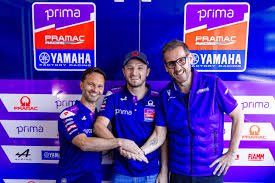
The 2026 MotoGP season is already shaping up to be one of the most intriguing in recent years, and at the center of it stands Jack Miller. The Australian rider, known for his fiery personality and fearless race craft, is officially set to continue with Yamaha under the Prima Pramac Yamaha MotoGP banner. The announcement confirms that Miller’s partnership with the Japanese manufacturer will extend into another season, with Yamaha making clear that his input will play a vital role in shaping the next-generation YZR-M1.
For fans, this deal marks more than just another contract renewal, it’s a pivotal moment for both Yamaha and Miller as they look to bounce back from a mixed 2025 campaign. The move signals stability for the rider and renewed optimism for Yamaha’s MotoGP project, which is undergoing major evolution ahead of 2026.
The Contract & Move, Jack Miller Yamaha 2026
When Yamaha Motor Co. confirmed Jack Miller’s contract renewal for 2026, it ended weeks of speculation about whether the Australian would remain part of the team’s rebuilding phase. For Miller, it’s a chance to finish what he started: helping Yamaha regain its edge after a challenging stretch in the premier class.
The deal cements Miller’s place within the Prima Pramac Yamaha MotoGP 2026 structure, a continuation that provides much-needed consistency for both the rider and team. In a world where MotoGP contracts are often short and volatile, the faith Yamaha has shown in Miller speaks volumes. His deep technical understanding, forged through years with Ducati and KTM, makes him a unique asset for Yamaha’s transformation toward a more competitive package.
Why the deal makes sense
From Yamaha’s perspective, keeping Miller onboard ensures they have a rider who knows how to develop a bike from scratch. His time with Ducati’s Desmosedici and KTM’s RC16 gave him a strong feel for different engine layouts, knowledge that is now crucial as Yamaha transitions to a V4 configuration for its 2026 MotoGP machine.
For Miller, the extension offers stability and a clear sense of purpose. He’s no longer chasing short-term podiums; instead, he’s investing in the long-term competitiveness of the YZR-M1 project. His social-media post after the announcement captured it perfectly: “So stoked to be sticking around for 2026. Big love to Yamaha Racing and everyone in the garage.” That enthusiasm mirrors Yamaha’s internal confidence that Miller’s adaptability will pay off in this new phase.
Team & Rider Line-Up for 2026
Yamaha’s 2026 MotoGP lineup reflects a balance of experience and new energy. The Prima Pramac Yamaha MotoGP Team will field Jack Miller alongside Toprak Razgatlıoğlu, the WorldSBK champion making his full-time MotoGP debut.
This combination has fans buzzing, Miller’s aggressive racecraft paired with Toprak’s phenomenal cornering control could make the team one of the most unpredictable and exciting pairings on the grid. While Miller brings the development know-how, Toprak’s fresh perspective may help Yamaha extract even more from the YZR-M1 2026 package.
Miller’s position in the structure
Although he’s part of the satellite setup, Miller’s role goes far beyond just scoring points. Yamaha views him as a core part of its development team, someone who can provide feedback that directly shapes the evolution of the new V4-powered M1. Internally, Miller is already being described as a “bridge” between the engineering department in Iwata and the race-weekend crews.
This hands-on development role is something Miller has embraced fully. He’s known for spending long hours with engineers, debriefing in minute detail about throttle behavior, chassis feedback, and electronics setup. Those insights are invaluable for Yamaha, which has struggled to match Ducati and KTM in top-speed and corner-exit acceleration.
The dynamic with Razgatlıoğlu
Fans are eager to see how the Miller, Razgatlıoğlu partnership plays out. Miller’s raw pace and adaptability complement Toprak’s artistry on the brakes. Inside the paddock, many see Miller as a natural mentor figure, a rider who can guide Yamaha’s new talent through the unpredictable early phases of adapting to MotoGP’s unique dynamics.
The 2026 season will test that chemistry. If they can find balance and consistency early, Prima Pramac Yamaha could emerge as the dark horse in the Yamaha MotoGP 2026 rider lineup, a team capable of surprising even the factory squads.
The Bike & Technology Focus: Yamaha YZR-M1 2026 and Miller’s Role
Yamaha’s decision to overhaul its MotoGP philosophy has been brewing for years, but 2026 marks the boldest step yet. After years of relying on an inline-four engine, Yamaha is now embracing the V4 engine layout, a move many believe was long overdue. For Miller, who has spent years riding V4-powered machines with both Ducati and KTM, it’s familiar territory.
What needed fixing
Throughout the 2025 season, both Miller and Yamaha engineers openly acknowledged that the current inline-four lacked the acceleration and torque needed to compete against Ducati’s dominant Desmosedici or KTM’s RC16. Miller’s feedback during post-race interviews was clear: the YZR-M1 had impressive handling and corner stability but simply lacked punch out of slower corners.
The Jack Miller Yamaha MotoGP bike 2026 project aims to fix exactly that. The introduction of the new V4 configuration promises not only higher power output but also better mass centralization, helping the bike handle more predictably while improving rear-grip consistency, an issue Yamaha riders have struggled with in recent seasons.
Miller’s influence on development
Few riders in the current paddock have Miller’s breadth of experience with engine layouts. Yamaha’s engineers are relying heavily on his feedback to refine the new machine’s characteristics. Miller has reportedly been working closely with the factory testing division to fine-tune power delivery and aerodynamic updates for the YZR-M1 2026.
He’s also playing a vital role in the early testing phases. Insiders say Miller was instrumental in identifying issues with early V4 prototypes, particularly throttle smoothness and rear-traction feedback, and his suggestions have already shaped major design adjustments.
Yamaha’s approach for 2026 is about more than horsepower; it’s about creating a balanced package. Miller’s background with multiple manufacturers gives him the insight to help Yamaha find that sweet spot between aggression and control.
What this means for fans
For Yamaha fans, this technical reset brings hope. The brand has endured several years of inconsistency, but with a rider like Miller helping lead the transformation, expectations are rising.
Supporters should expect a machine that feels notably different from the 2025 version, stronger on acceleration, better in braking stability, and more responsive on corner exits. If the Jack Miller Yamaha development bike 2026 lives up to internal expectations, Miller could be a regular top-five contender again.
More importantly, Miller’s presence ensures fans will see the full picture of Yamaha’s progress on track. He’s known for his candid personality, if something’s not working, he says it openly. That honesty is part of why Yamaha values him: he gives engineers real-world data without sugar-coating.
What to Expect from Jack Miller Yamaha MotoGP 2026 Season
After a 2025 campaign that brought mixed results, Miller is entering the 2026 MotoGP season with renewed optimism. His focus isn’t just on results but on steady progress.
He’s acknowledged the growing strength of rivals like Ducati and Aprilia but believes Yamaha’s upcoming V4 engine will close much of that gap. Miller’s expectation is simple: consistency. More top-10s, occasional podiums, and a clear upward trend by mid-season.
Many fans are wondering: Will Jack Miller win races with Yamaha in 2026? While that might be ambitious given the development timeline, insiders believe at least one podium finish is realistic.
Yamaha’s engineers are confident the new bike will perform competitively from the start of the season, though early rounds will still be crucial for fine-tuning. Miller’s adaptability and test experience should make him one of the first riders to unlock the potential of the new M1.
Jack Miller’s collaboration with Yamaha in 2026 is also a crucial test for both rider and manufacturer. Yamaha’s decision to adopt a V4 engine configuration, after decades of running its inline-four setup, has raised high expectations among fans and engineers alike. The move, largely driven by the need to match the performance curve of Ducati and KTM, could redefine how Yamaha approaches future MotoGP seasons. Miller, who has significant experience with both Ducati’s and KTM’s V4 power units, is uniquely positioned to guide Yamaha through this transformation.
Jack Miller’s MotoGP 2026 Season Expectations
As 2026 approaches, analysts predict that Jack Miller’s MotoGP season with Yamaha will be one of the most scrutinized campaigns on the grid. The Australian’s move from KTM to Prima Pramac Yamaha signals not just a team change but a strategic reboot of his MotoGP career. Miller’s raw speed, aggressive riding style, and proven experience on multiple manufacturers’ machines make him a valuable development asset for Yamaha.
Miller himself expressed optimism about the switch, saying he’s “stoked to be sticking around for 2026,” confirming his confidence in Yamaha’s long-term project. The enthusiasm is mutual, Yamaha sees Miller as a cornerstone in refining the handling and throttle delivery of the YZR-M1 2026 bike.
Yamaha MotoGP 2026 Rider Lineup and Team Structure
For 2026, Yamaha has reshaped its MotoGP rider lineup to strengthen both development and race results. Alongside Jack Miller, the team is expected to feature Toprak Razgatlioglu, who brings a WorldSBK championship pedigree and an aggressive corner-entry style that complements Miller’s consistency. Together, they form one of the most technically balanced and fan-favorite pairings on the grid.
The Prima Pramac Yamaha MotoGP 2026 team will focus heavily on communication between the factory squad and the satellite program. Yamaha’s technical department in Iwata has reportedly prioritized cross-team data sharing to fast-track updates throughout the season. Miller’s feedback will be instrumental in refining the electronics and rideability of the YZR-M1, especially given his history with Ducati’s advanced traction systems and KTM’s chassis dynamics.
Jack Miller’s Development Role in Yamaha 2026
Yamaha’s engineers have long been aware that their biggest gap lies in power delivery and acceleration, particularly when exiting slow corners. Miller, who’s familiar with the strengths and weaknesses of both Ducati’s Desmosedici and KTM’s RC16, is expected to play a hands-on role in closing this gap.
According to insiders, Yamaha’s V4 development bike for 2026 is already incorporating feedback from Miller’s early test sessions. He’s reportedly focusing on rear-end stability and throttle smoothness, two areas he identified as critical for competitiveness on high-traction circuits like Misano and Red Bull Ring.
“Jack brings a rare combination of aggression and technical understanding,” a Yamaha engineer shared privately. “He knows how to communicate what the bike needs, especially under braking and corner exit.”
What Changes Does Jack Miller Bring to Yamaha in 2026?
Miller’s addition to Yamaha is expected to bring a cultural and strategic shift within the team. Known for his down-to-earth personality and meticulous work ethic, he injects both energy and precision into Yamaha’s race weekends. The Australian has also pushed for more transparency in data analysis sessions, promoting closer collaboration between factory and satellite engineers.
His presence could further enhance Yamaha’s adaptability to evolving track conditions, an area where they struggled in the 2025 season. Unlike previous Yamaha riders who thrived on smooth corner speed, Miller’s ability to exploit late braking and rear grip will influence how the 2026 YZR-M1 is tuned.
Yamaha’s goal is to merge Miller’s aggressive riding input with the fluidity that defines their bike DNA, a blend that, if successful, could put them back in podium contention.
Yamaha YZR-M1 2026: The Machine Behind the Mission
The Yamaha YZR-M1 2026 represents the brand’s boldest technical step in over a decade. The adoption of a V4 configuration aims to deliver better top-end speed while preserving Yamaha’s hallmark agility. Engineers are also introducing a lighter frame structure, improved aerodynamics, and upgraded electronics to balance straight-line power with cornering stability.
Jack Miller’s early test runs have revealed promising signs: smoother throttle response, more consistent traction, and improved mid-corner balance. However, challenges remain, particularly in managing engine heat and fuel efficiency, issues that have historically plagued Yamaha during longer races.
The collaboration between Miller and Yamaha’s factory test team is ongoing, with the rider expected to spend significant time in pre-season testing to fine-tune mapping and clutch settings.
Jack Miller vs. Factory Yamaha Riders 2026
A major talking point ahead of the new season is how Jack Miller will stack up against Yamaha’s factory riders. While Razgatlioglu’s natural flair and Yamaha familiarity could make him the early favorite, Miller’s adaptability and V4 experience may give him an edge in development races.
The dynamic between the two riders is anticipated to be friendly yet competitive, exactly what Yamaha needs to push forward. Miller’s consistent race finishes could complement Razgatlioglu’s explosive performances, creating a healthy internal rivalry that benefits the entire team.
Jack Miller’s Performance Goals for the 2026 MotoGP Season
Jack Miller’s objectives for 2026 are clear: frequent top-five finishes, at least one podium before mid-season, and a realistic push for race wins once Yamaha’s V4 project matures. He has emphasized that 2026 will be about “building the base for future titles,” aligning with Yamaha’s multi-year competitive roadmap.
The Australian’s technical understanding of racecraft, tire management, and electronics—especially under variable conditions, makes him a reliable development lead. Fans can expect Miller to excel particularly on circuits that reward hard braking and corner exits, such as Assen, Austria, and Thailand.
Yamaha vs. Ducati vs. KTM: The 2026 Power Struggle
With Yamaha entering the V4 era, the MotoGP 2026 manufacturer battle will reach unprecedented intensity. Ducati continues to dominate on top-end power and braking stability, while KTM maintains strength in acceleration and chassis balance. Yamaha’s challenge will be finding harmony between agility and torque delivery, areas where Miller’s input is critical.
Miller’s familiarity with both competitor machines allows Yamaha to benchmark performance metrics effectively. By mid-2026, the team hopes to close the acceleration deficit and reclaim its position as a top-three contender in the constructors’ standings.
Will Jack Miller Win Races with Yamaha in 2026?
While it might be premature to predict victories early in the season, Jack Miller’s track record suggests he could be a dark horse. His ability to adapt quickly, particularly when given the right technical package, has been proven throughout his MotoGP career.
If Yamaha’s new engine delivers the expected horsepower gains and reliability improvements, Miller could emerge as a consistent podium finisher by mid-season. Yamaha’s revamped electronics suite and aerodynamics package could further amplify his strengths in mixed-weather and high-grip conditions.