
Nestled on the west coast of Ireland, Kilkee has long been one of those seaside towns that feels frozen in time, charming, windswept, and full of tradition. But recently, the town became the centre of an unexpected national debate when the Kilkee benches replaced plastic. What began as a small-scale maintenance project by Clare County Council soon sparked a much larger conversation about sustainability, heritage, and identity.
For generations, Kilkee’s blue-and-white wooden benches were more than just places to rest; they were a familiar part of the town’s landscape. Locals and tourists alike sat on them to enjoy sea views, share chips, or watch the Atlantic crash against the cliffs. So when those iconic benches were suddenly replaced by sleek, recycled plastic seating, emotions ran high.
What Happened When Kilkee Benches Replaced Plastic
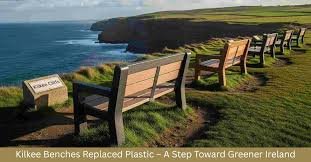
The change started quietly. As part of a public space maintenance initiative, Clare County Council began removing old, weathered wooden benches along Kilkee’s promenade, a spot adored by visitors and photographers. In their place appeared new benches, made entirely from recycled plastic materials, designed to withstand the region’s salty air and unpredictable weather.
The council’s reasoning was straightforward: sustainability and practicality. The old benches had become difficult to maintain, often rotting due to constant exposure to sea spray. Repainting them every year drained funds that could be used elsewhere. The new benches, by contrast, promised longevity, no rust, no splinters, and minimal upkeep.
Yet, what might seem like a simple upgrade soon transformed into one of Ireland’s most discussed local controversies. Locals took to social media to express dismay that Kilkee’s heritage look was being replaced with what one Facebook post famously called “plastic things.”
The Heritage Behind Kilkee’s Benches
To understand why the issue hit such a nerve, it’s important to appreciate what those benches represented. Kilkee’s seafront benches weren’t just functional; they were a symbol of the town’s character. Their bright blue-and-white paint mirrored the hues of the sea and sky, becoming a signature feature in photographs, postcards, and tourism brochures.
For older residents, the benches carried memories, children eating ice cream, elderly couples chatting, families gathering after swims. To them, replacing the wooden seating with plastic benches felt like losing a small but meaningful part of the town’s soul.
Critics of the move argued that modern recycled designs clashed with Kilkee’s traditional coastal aesthetic. They feared that by trading classic wood for durable polymer, Kilkee risked becoming another town stripped of its unique identity in the name of “progress.”
Why Did Kilkee Benches Replace Plastic?
Despite the backlash, the decision wasn’t made in haste. Clare County Council defended its choice, outlining several compelling reasons for the transition.
- Environmental Sustainability: Each recycled plastic bench prevents hundreds of kilograms of waste from entering landfills. The council wanted to show Kilkee’s commitment to eco-friendly initiatives that align with Ireland’s national plastic reduction goals.
- Durability in Coastal Conditions: Wooden benches deteriorate quickly in salty, humid air. Recycled plastic alternatives can last over 25 years without structural damage or fading.
- Lower Maintenance Costs: The old benches required frequent repainting and repairs. Plastic benches, by contrast, need little more than a quick rinse — saving both time and taxpayer money.
- Public Safety: As older benches decayed, splinters and exposed nails posed risks to children and elderly residents. The smoother finish of recycled plastic benches provides a safer seating experience.
In other words, the Kilkee benches replaced plastic initiative was a deliberate step toward long-term sustainability and practicality, not a careless abandonment of heritage.
The Kilkee Benches Replaced Plastic Debate
Of course, sustainability alone couldn’t silence the controversy. The Kilkee benches replaced plastic debate quickly grew beyond the local Facebook groups and entered national headlines. Major outlets like Express UK, MSN, and The Clare Champion covered the story, contrasting the eco-friendly argument with the heritage preservation viewpoint.
On one side were those who applauded the change. They viewed it as an example of Ireland’s environmental progress, a coastal town taking real steps to reduce waste. Supporters saw Kilkee’s recycled plastic benches as a practical symbol of eco-conscious living.
On the other side stood heritage advocates, who argued that beauty and history were being sacrificed for convenience. The term “awful plastic things,” used by some residents and amplified by tabloids, captured a sense of frustration that something familiar had been replaced without enough public input.
This divide highlighted a broader issue, the tension between environmental innovation and cultural identity.
Environmental Reasons Behind the Change
The environmental reason Kilkee benches replaced plastic goes deeper than durability. Recycled plastic benches are typically made from discarded packaging, containers, and industrial waste. Each installation removes harmful plastics from the waste stream while reducing the demand for virgin materials.
Ireland, like many EU countries, has been pushing for a circular economy, where resources are reused rather than disposed of. Kilkee’s council saw an opportunity to contribute to this movement in a visible, practical way.
Furthermore, wooden benches, even when sourced responsibly, require periodic treatments with chemical varnishes or paints, substances that can run off into the nearby sea. By using recycled materials, Kilkee effectively reduced chemical runoff and improved its environmental footprint.
The Role of Clare County Council and Public Consultation
According to reports from The Clare Champion and AddMagazine, the Kilkee benches replacement project was part of a larger town improvement plan spearheaded by Clare County Council. The council stated it had reviewed maintenance cost data over several years before deciding on recycled alternatives.
However, some residents felt they weren’t adequately consulted. Many in the community only learned of the plan once the old benches were removed. The community response to Kilkee benches replaced plastic reflected a sense of exclusion rather than just aesthetic disappointment.
In later statements, council representatives assured residents that feedback would be considered for future urban design projects. This suggests that Kilkee’s controversy could lead to more transparent public consultation processes across Clare County.
Tourism and Visual Identity
Tourism is Kilkee’s lifeblood, and changes to the town’s appearance always carry weight. Some local businesses worried that the new plastic benches would make the promenade look “too modern” or “less photogenic.” Others argued that most visitors wouldn’t notice — or would actually appreciate the eco-friendly message.
Interestingly, sustainability-minded travelers now seek destinations that embrace eco-conscious initiatives. Publications like My Green Bucks have highlighted Kilkee as an example of coastal preservation done right, calling the decision a “small but symbolic step” toward greener tourism.
Whether the change affects visitor numbers remains to be seen. But one thing is clear: Kilkee benches replaced plastic has positioned the town as a talking point in Ireland’s broader sustainability conversation.
Comparing Wooden and Recycled Plastic Benches
To better understand the reasoning, it helps to look at the practical differences between wooden and recycled plastic benches:
| Feature | Wooden Benches | Recycled Plastic Benches |
| Durability | 5–10 years (requires upkeep) | 25+ years with minimal maintenance |
| Maintenance | Regular painting & sealing | Simple cleaning, no repainting |
| Environmental Impact | Uses natural resources | Made from recycled waste materials |
| Weather Resistance | Vulnerable to rot & corrosion | Fully weatherproof |
| Aesthetic | Traditional, warm look | Modern, uniform finish |
While the traditional wooden style holds sentimental value, the eco-friendly option undeniably wins on sustainability and cost-effectiveness.
Community Reaction and the Emotional Impact
Perhaps the most fascinating aspect of this story is how it revealed the emotional connection people have with everyday spaces. The Kilkee benches replaced plastic community reaction showed that even small changes can spark big feelings.
Some residents started petitions calling for the return of the blue-and-white benches, while others suggested a compromise, repainting the new benches in the traditional colors to keep the visual charm alive.
The council’s move to recycled materials might have been rooted in logic, but the lesson it offered was human: heritage matters, even in sustainability. Balancing those values is the challenge every modern town faces.
A Broader Symbol of Change
The Kilkee benches replaced plastic initiative is about more than just seating. It’s a reflection of how local communities everywhere are negotiating the balance between preserving the past and building a sustainable future.
For Kilkee, a small coastal town in Ireland, the project symbolises both pride and growing pains. While debates continue, one truth remains, the town has sparked national awareness about how even the smallest design choices can embody big environmental messages.
Kilkee didn’t just replace benches. It replaced a mindset, choosing sustainability over nostalgia, while still learning how to hold on to the charm that made it beloved in the first place.
The conversation around sustainability in Kilkee didn’t stop at benches. Residents began discussing how small towns like theirs can lead by example in eco-friendly practices. While some argued that recycled plastic benches weren’t visually appealing or in line with the coastal heritage, others emphasized that climate-conscious choices must start somewhere, and this was a meaningful first step.
The Kilkee benches replaced plastic initiative also sparked a broader dialogue about heritage versus progress. Locals who had fond memories of the old blue-and-white benches associated them with summers by the sea, ice cream cones in hand, and postcard-perfect views. These benches weren’t just furniture; they were part of the emotional landscape. However, for others, the debate wasn’t about nostalgia but about survival, the coastal town’s resilience against environmental degradation and the need for smarter materials that could endure salt air and sea spray.
What Materials Were Used When Kilkee Benches Replaced Plastic?
A key question many asked was, “What materials were used when Kilkee benches replaced plastic?” Contrary to early reports claiming “cheap plastic,” the new benches are made from recycled composite materials, often a mix of post-consumer plastics and reclaimed waste. These materials are designed to be weather-resistant, UV-stable, and virtually maintenance-free, unlike wood or metal that rust, rot, or peel over time.
The Clare County Council, responsible for the Kilkee benches replaced plastic project, clarified that the goal was not to diminish the town’s charm but to protect public assets in an environmentally responsible way. Recycled plastic benches have a lifespan up to five times longer than wooden ones and don’t require painting, varnishing, or constant repairs.
Sustainability Meets Cost Efficiency
From a financial perspective, the decision was also rooted in maintenance cost concerns. The maintenance issue with traditional wooden benches in seaside towns like Kilkee had become increasingly difficult to manage due to harsh weather and limited budgets. Replacing wooden or metal benches frequently was neither sustainable nor economical.
The Kilkee benches replaced plastic initiative thus presented a two-fold solution, reduce environmental impact and cut long-term maintenance costs. According to local reports, the council found that over a ten-year period, recycled plastic benches would save money, reduce waste, and avoid continuous repairs that required materials, manpower, and transportation.
Community Reaction to Kilkee Benches Replaced Plastic
Still, the community reaction was far from one-sided. Social media saw a mix of outrage, curiosity, and support. On platforms like Facebook and local newspapers, residents voiced both disappointment and approval. Some described the replacements as “soulless plastic things,” while others defended the change as a necessary evolution in a world increasingly conscious of sustainability and waste reduction.
In many ways, the Kilkee benches replaced plastic debate highlighted the emotional tension that often comes with public space transformation. People don’t just see benches, they see their memories attached to them. Yet, advocates for the change pointed out that if Kilkee’s iconic seaside is to remain beautiful for future generations, it must adapt with environmentally responsible decisions.
Heritage and Identity: A Delicate Balance
There’s no denying that Kilkee’s old blue-and-white benches carried heritage significance. They were a visual hallmark of the seafront, tied to local identity and tourism. The Kilkee benches replaced heritage benches discussion raised a valid concern, how do towns modernize without losing their soul?
To address this, the council reportedly explored designs that would mirror the color palette and shape of the original benches, blending nostalgia with innovation. In future phases, there may even be plans to introduce plaques or artistic elements that honor Kilkee’s heritage, ensuring the replacements don’t erase its cultural footprint but instead evolve it.
Kilkee Benches and Tourism: Will It Affect Visitor Perception?
Tourism is a cornerstone of Kilkee’s charm, with visitors flocking each summer to enjoy its scenic cliffs, family-friendly beaches, and relaxed atmosphere. Naturally, some locals worried that Kilkee benches replaced plastic might make the town feel less “authentic.”
However, eco-conscious tourism is a growing global trend. Travelers today often favor destinations that show tangible commitment to sustainability. In that sense, Kilkee’s move may actually enhance its reputation as a coastal town taking responsibility for its environment. The narrative shifts from “plastic replacements” to “a seaside town protecting its natural beauty through recycled innovation.”
Kilkee Benches Replaced Plastic by Clare County Council
It’s worth noting that the Clare County Council’s decision wasn’t made in isolation. The replacement was part of a larger coastal preservation effort aimed at improving infrastructure and reducing environmental strain. According to officials, all public seating and installations near the seafront are subject to regular review for safety, longevity, and environmental compliance.
The Kilkee benches replaced plastic by council project, though small in scale, acts as a symbolic example for other Irish coastal towns. By choosing recycled materials, the council demonstrated a commitment to circular economy principles, where waste is reused and reimagined rather than discarded.
Recycled Plastic Benches vs Wooden Benches: Which Is Better?
The debate between recycled plastic benches vs wooden benches has existed for years in municipalities worldwide. Wooden benches offer aesthetic appeal and historical charm, while plastic alternatives bring practical durability.
Advantages of Recycled Plastic Benches:
- Resistant to rot, rust, and insect damage
- Made from sustainable, recycled materials
- Require minimal upkeep, no painting or staining
- Long lifespan, reducing waste over time
- Cost-effective in the long run
Disadvantages:
- May lack traditional aesthetic warmth
- Can be viewed as less “authentic” in heritage-rich areas
For Kilkee, functionality and sustainability ultimately outweighed tradition. Given the harsh coastal weather, wooden benches frequently deteriorated within years, costing the town both money and maintenance hours. The recycled plastic alternative promised a more reliable, eco-friendly solution for the seafront.
The Broader Message Behind Kilkee’s Plastic Bench Replacement
What’s unfolding in Kilkee is more than a story about benches, it’s a reflection of how small communities grapple with environmental change and modernization. The Kilkee benches replaced plastic initiative is a microcosm of the global sustainability movement.
It shows how even local councils in Ireland are stepping up to adopt greener solutions despite initial backlash. Whether one agrees with the aesthetics or not, the eco-benefits are undeniable. The decision aligns with broader EU sustainability goals and Ireland’s push toward reducing carbon footprints through community-level action.