

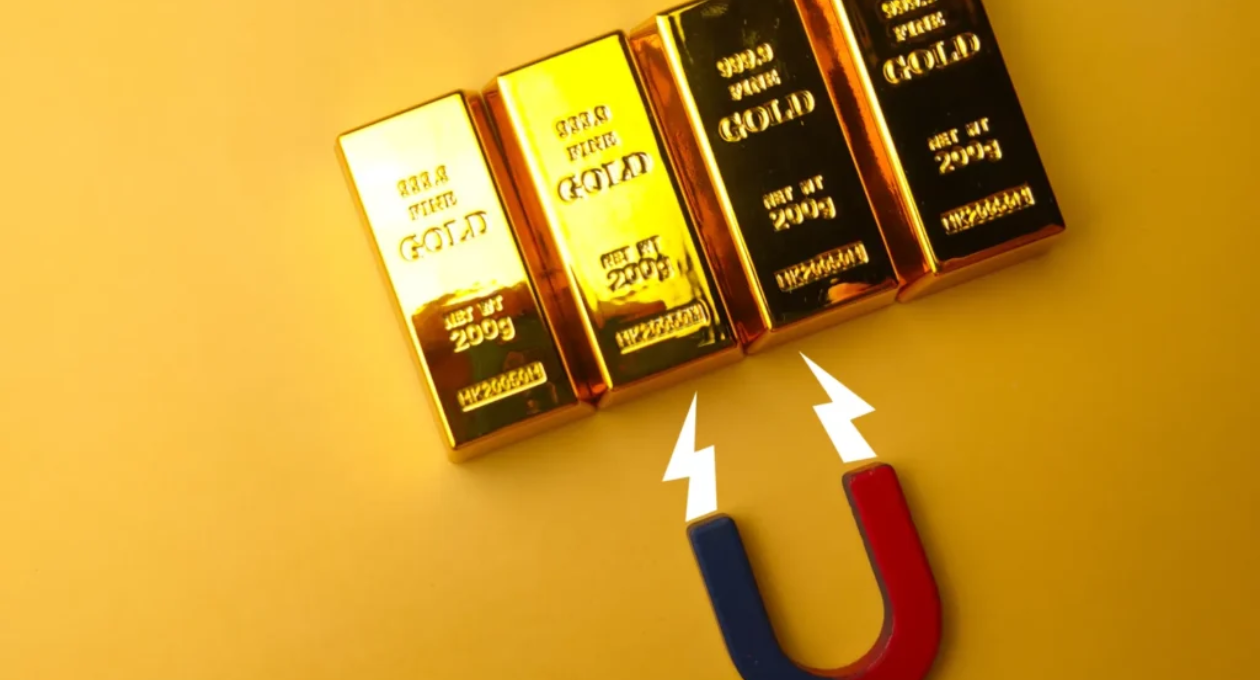
Gold has been prized for centuries as a symbol of wealth, beauty, and craftsmanship. From coins to necklaces, rings, and even investment bars, it seems like gold is everywhere. But if you’ve ever tried using a magnet on your gold jewelry or coins, you might have noticed something curious: nothing happens. This raises the question, is gold magnetic, and if not, why? Understanding gold’s interaction with magnets isn’t just a science lesson; it’s a practical tool for verifying authenticity and learning about the metals in your jewelry.
Why Gold Isn’t Magnetic
The reason gold doesn’t stick to a magnet has to do with its atomic structure and the way electrons behave. Gold is classified as a diamagnetic metal, which means it creates a very weak opposing magnetic field when exposed to a magnetic force. This response is so subtle that for all practical purposes, pure gold is non-magnetic.
- Diamagnetic metals like gold, silver, and copper are repelled by magnetic fields, but the effect is nearly imperceptible.
- Paramagnetic metals, like aluminum or platinum, are weakly attracted to magnets, but again, the effect is minimal.
- Ferromagnetic metals, such as iron, nickel, and cobalt, are strongly attracted to magnets, which is why these metals are often used in magnetic tools and devices.
So, when you ask, “why isn’t gold magnetic?”, it’s because its electron configuration does not allow for unpaired electrons to align with a magnetic field strongly. This is a natural property of pure gold and one reason it has remained a stable and trusted material for centuries.
Can Pure Gold Stick to a Magnet?
The short answer is no. Pure gold, often referred to as 24k gold, will not stick to a magnet under normal conditions. Its magnetic susceptibility is extremely low, meaning it resists magnetic alignment. This makes 24k gold really non-magnetic, unlike metals such as iron or nickel.
- A simple at-home test involves using a small fridge magnet or neodymium magnet to see if the gold object is attracted.
- If the magnet does not stick, the object is either pure gold or contains other non-magnetic metals.
- If it is attracted, there’s likely another metal in the alloy, or the item may be fake.
This test is especially useful when combined with other methods, such as a gold purity test or a professional assay, to verify the authenticity of coins, bars, or jewelry.
Gold Alloys and Magnetic Behavior
Pure gold is rarely used in jewelry because it’s too soft for daily wear. Instead, gold is mixed with other metals to create alloys like 10k, 14k, or 18k gold. These alloys can sometimes exhibit magnetic behavior depending on the metals included.
- 10k gold: Often contains a higher proportion of metals like nickel or copper, which may make it slightly magnetic.
- 14k gold: Usually retains a mostly non-magnetic property but may show mild attraction if nickel is present.
- 18k gold: Closer to pure gold, mostly non-magnetic with very minimal response.
Metals commonly alloyed with gold include nickel in gold alloys, copper in gold alloys, and sometimes small amounts of iron. These additions improve durability, color, and workability, but they can alter the magnetic field response slightly.
So when you wonder, “is 14k gold magnetic?”, the answer is usually no, but certain alloys containing higher nickel content might respond weakly to a magnet. The same principle applies to is 18k gold magnetic and is 10k gold magnetic, with the lower karat gold being more likely to have magnetic behavior due to added metals.
Testing Gold with Magnets
Using magnets to test gold is a simple, inexpensive, and surprisingly effective method for identifying fake or alloyed pieces. There are a few approaches:
Simple At-Home Magnet Test
- Grab a small neodymium or fridge magnet.
- Place the magnet close to your gold jewelry or coin.
- Observe whether the item is attracted or repelled.
- If the gold is pure (24k) or high-karat alloyed with non-magnetic metals, it will not stick.
- If the piece is attracted to the magnet, it may contain ferromagnetic metals like iron or nickel, or it may be gold-plated over a non-gold base.
Professional Magnetic Testing
Jewelry stores and laboratories often use specialized magnetic devices that measure the magnetic susceptibility of metals. These tools can detect even the slightest magnetic response in gold alloys, providing a precise assessment of authenticity.
Some professional checks include:
- Magnetic gold detectors: Common in bullion stores to quickly separate real gold from fakes.
- Gold vs silver magnet test: Helps differentiate between non-magnetic precious metals.
- Gold coins magnetic test: Ensures bullion and collectible coins are authentic.
Why Some Gold Appears Magnetic
Even though pure gold is diamagnetic, you may sometimes notice a magnet attracting a gold item. Here are the main reasons:
- Gold-plated jewelry: The base metal beneath the gold layer may be magnetic.
- Alloy composition: Lower-karat gold often contains metals like nickel or iron that respond to magnets.
- Fake gold: Many imitation gold products use ferromagnetic metals to mimic gold’s appearance cheaply.
Understanding this is critical for anyone investing in gold coins, gold bars, or fine gold jewelry. Knowing the magnetic properties of metals in your item helps you distinguish between real gold and imposters.
Comparing Gold’s Magnetism to Other Metals
Gold’s non-magnetic nature is unique among metals. Here’s how it compares:
- Gold vs Silver: Both are diamagnetic; neither is strongly attracted to a magnet.
- Gold vs Platinum: Platinum is paramagnetic, so it may show a weak attraction.
- Gold vs Brass/Copper: These metals are also diamagnetic, like gold, and show no strong magnetic response.
- Gold vs Iron/Nickel/Cobalt: These are ferromagnetic and strongly attracted to magnets, which makes them useful in detecting fake gold.
By understanding these differences, you can more confidently perform at-home magnetic tests for gold authenticity.
Common Myths About Gold and Magnets
There are several myths surrounding gold’s magnetic properties, and they can confuse even experienced collectors and buyers. Understanding these misconceptions helps you avoid mistakes when testing your jewelry or coins.
All gold is completely non-magnetic.
- While pure gold (24k) is indeed non-magnetic, many gold alloys contain metals like nickel, copper, or iron, which can give the piece a slight magnetic response.
- Low-karat gold, such as 10k or 12k, may sometimes react to a strong magnet due to these added metals.
If gold sticks to a magnet, it’s fake.
- This is not always true. Gold-plated items or alloys with magnetic metals may respond to a magnet but still contain genuine gold. The key is understanding the composition of the alloy.
Magnets can detect all fake gold.
- Magnets are a useful first step, but they cannot detect fakes made from non-magnetic metals or chemicals that mimic gold’s appearance. Other tests, such as acid tests, electronic gold testers, or X-ray fluorescence, are often necessary for accuracy.
Gold in Coins, Chains, and Rings
Gold is used in a wide range of jewelry and collectibles, and understanding how these items interact with magnets is crucial.
Gold Coins
- Pure bullion coins (like 24k gold coins) are non-magnetic.
- Collector coins or coins with alloyed gold may show minor magnetic attraction depending on the metals used.
Gold Chains and Necklaces
- Chains often have lower karat gold for durability, meaning they can contain nickel or copper, which may create slight magnetic behavior.
- Hollow chains or layered designs (such as gold-plated or gold-filled chains) may appear magnetic because of the underlying metals.
Gold Rings
- Rings, especially wedding bands or fashion rings, are commonly alloyed for hardness.
- High-karat rings (18k+) are typically non-magnetic.
- Lower-karat rings (10k or 12k) may show a weak response if ferromagnetic metals are present.
How to Interpret a Magnet Test
A simple magnet test is easy but must be interpreted carefully:
- No movement: Your gold is likely pure or a high-quality alloy with non-magnetic metals.
- Slight attraction: The gold may contain some ferromagnetic alloy metals (nickel, iron), or it may be gold-plated over a magnetic base metal.
- Strong attraction: The piece is probably not genuine gold or contains a high amount of magnetic metals.
Tips for Accurate Testing:
- Use a strong neodymium magnet instead of a weak fridge magnet.
- Perform the test on multiple spots to ensure consistency.
- Remember that some authentic coins or jewelry may still show minimal attraction due to alloying.
Metals That Can Make Gold Magnetic
Understanding the metals added to gold helps explain why some gold alloys show magnetism:
- Nickel: Common in white gold alloys; can produce slight magnetic response.
- Iron: Occasionally used in specialty alloys; strongly magnetic.
- Copper: Usually non-magnetic but may influence the alloy’s overall behavior when combined with iron or nickel.
- Cobalt and Chromium: Rarely used, but may affect magnetic properties slightly.
Knowing the alloy composition is crucial for interpreting results correctly, especially for gold-filled or gold-plated jewelry.
Gold vs Other Precious Metals
When testing jewelry or coins, it’s helpful to compare gold with other metals:
- Silver: Like gold, silver is diamagnetic and shows almost no attraction to magnets.
- Platinum: Slightly paramagnetic, meaning it can show a weak attraction.
- Copper and Brass: Diamagnetic, like gold, and unresponsive to magnets.
- Fake or alloy metals: Iron, nickel, or steel are ferromagnetic and will stick strongly.
This comparison is particularly useful for distinguishing real gold vs fake gold magnetic difference, which can be subtle for beginners.
Simple Gold Magnet Test for Beginners
For those new to testing gold, here’s an easy step-by-step guide:
- Obtain a strong magnet (neodymium recommended).
- Place your gold item close to the magnet without touching.
- Observe any movement:
- No movement = likely real gold or high-quality alloy.
- Slight movement = low-karat gold or gold-plated item.
- Strong movement = probable fake or highly alloyed item with magnetic metals.
- No movement = likely real gold or high-quality alloy.
This method works well for gold coins, rings, necklaces, and bracelets, giving a first indication of authenticity before professional testing.
Why Pure Gold is Non-Magnetic Explained Simply
At its core, gold’s lack of magnetism comes from physics:
- Gold’s electron configuration prevents unpaired electrons from aligning with an external magnetic field.
- As a diamagnetic metal, gold actually produces a tiny opposing magnetic field when exposed to magnets, but this effect is imperceptible without sensitive instruments.
- This explains why gold jewelry and bullion consistently show no attraction to magnets, making it a reliable material for long-term use.
In short, the question “why pure gold is not magnetic explained simply” boils down to atomic structure and electron behavior.
Gold Testing for Buyers and Collectors
For anyone investing in gold or buying fine jewelry, understanding gold’s magnetic behavior is both practical and essential.
- Detecting fake gold: Magnets are a quick first step to flag suspicious items.
- Verifying alloys: Check for slight magnetism in lower-karat gold.
- Avoiding allergic reactions: Nickel-containing magnetic alloys may irritate sensitive skin.
- Purchasing coins and bars: Knowing that pure gold is non-magnetic helps identify counterfeit bullion.
Remember, magnets are a starting point; combining them with visual inspection, hallmark checking, and professional assays ensures confidence in your purchases.