
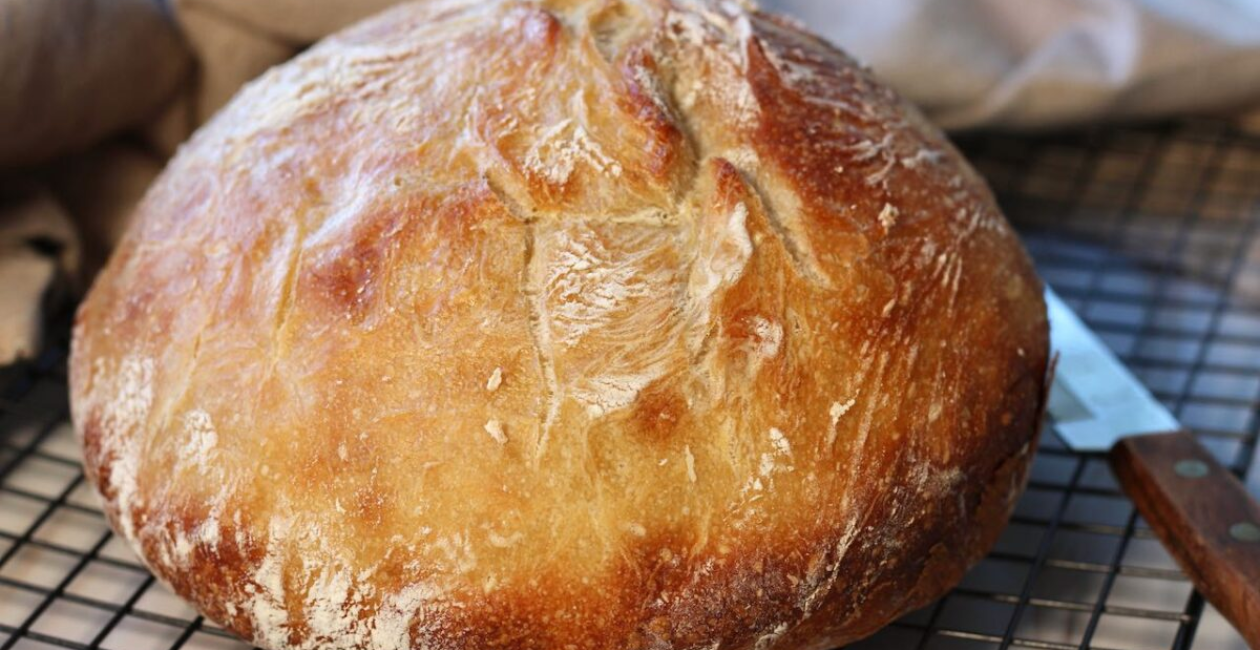
The appeal of NY Times no knead bread is easy to understand the moment you pull a finished loaf from the oven. It looks like artisan bakery bread, smells rich and toasty, and has that crackly crust so many home bakers chase. Yet the method itself is surprisingly simple. The famous version shared by Mark Bittman and Jim Lahey was first published by The New York Times in 2006, and Lahey’s bakery still describes it as a method that changed how people bake at home.
What made this bread stand out was not just the result, but the idea behind it. Instead of kneading dough for a long time, the recipe relies on a wet dough, a slow fermentation, and baking inside a preheated covered pot. According to Bittman’s later write-up of the same technique, that combination creates a crackling crust, open crumb, light texture, and deep flavor with very little hands-on work.
That is why this loaf became such a lasting favorite. It feels approachable for beginners, but it also satisfies experienced bakers who want a reliable rustic bread without turning bread day into a complicated project.
What Is NY Times No Knead Bread?
At its core, NY Times no knead bread is a rustic loaf made from a small handful of ingredients and a lot of patience. The method was created by Jim Lahey, owner of Sullivan Street Bakery in New York City, and shared with a wide audience through The New York Times. Lahey’s bakery says the newspaper published the method in 2006 and that it remains one of the paper’s most popular recipes.
The bread is not called “no knead” because nothing happens to the dough. It is called that because the dough develops structure mainly through time rather than traditional kneading. In Bittman’s version, you mix flour, yeast, salt, and water, then let the dough sit for a long rise, usually about 18 hours before shaping and proofing. The recipe page describes the full process as about 24 hours, though most of that time is unattended.
That long rest is what makes the loaf so different from a quick bread recipe. The dough slowly builds flavor and texture while you mostly leave it alone.
Why This Bread Became So Popular
One reason NY Times no knead bread became such a classic is that it changed what many people thought homemade bread had to be. Bread baking often sounded intimidating, messy, and technical. This method made it feel possible for ordinary home cooks.
Bittman wrote that thousands of people had made the recipe since he and Lahey first shared it, and that for many it was their first real experience baking bread. That says a lot about why the recipe lasted. It gave people a way to make something that looked impressive without requiring advanced skills.
There is also the visual reward. A finished loaf has the kind of crust and airy interior that people usually associate with bakery bread, not a beginner recipe. Sullivan Street Bakery even says the method allowed home bakers to make bakery-quality loaves from their own ovens. That promise is a big part of the recipe’s staying power.
The Method That Makes It Work
The real magic of NY Times no knead bread is not a secret ingredient. It is the process. Bittman explains that the wet dough and slow fermentation take the place of kneading. That means time is doing work your hands would normally do.
The other key step is the covered pot. The recipe calls for heating a covered pot in a 450 degree oven before dropping in the proofed dough. Bittman says this creates essentially an oven within an oven, trapping steam as the loaf bakes. That trapped steam helps the crust become deeply browned and crisp while the inside stays light and tender.
This is one reason so many people feel amazed the first time they try it. The dough can look sticky, rough, and unimpressive early on. Then the pot and the steam transform it into something far more beautiful than most beginners expect.
The Ingredients Stay Simple
Another reason this bread remains so loved is that the ingredient list stays refreshingly short. Bittman’s published version uses all-purpose or bread flour, instant yeast, salt, and water, with cornmeal, semolina, or bran only for dusting.
That simplicity matters. Home cooks do not need special starters, mixers, or a long shopping list. The method asks more from your timing than from your pantry. It is also flexible enough that Bittman includes a whole wheat variation, allowing up to half of the flour to be swapped for whole wheat.
Because the ingredients are so basic, the flavor depends heavily on fermentation and baking technique. That is part of what makes the loaf feel honest and satisfying. It tastes like bread, not like a recipe trying too hard.
What the Dough Should Feel Like
A lot of first-time bakers worry they have done something wrong because the dough for NY Times no knead bread is much wetter than traditional bread dough. That concern is completely understandable. But the sticky, shaggy texture is actually part of the design.
Bittman describes the mixed dough as shaggy and sticky, and even notes that a little more water may be needed if it seems dry. After the first long rest, the dough is still soft, though flour helps make it manageable during shaping.
This is one of the biggest mindset shifts in the recipe. If you are used to smooth, firm dough, this one can feel wrong at first. But that wetter texture helps create the open crumb and lighter structure people want from this style of loaf.
Why Patience Matters More Than Technique
If there is one thing this bread asks for, it is patience. Bittman says ideally you start the dough about 24 hours before you plan to eat the bread, though shorter options are possible. He also notes that cutting the time too much sacrifices some flavor and open crumb.
That detail matters because people often look at no-knead bread and assume it is quick bread. It is easy bread, but it is not instant bread. The long rise is what gives the loaf much of its character. The dough develops bubbles, flavor, and structure while resting, and that rest is what makes the final loaf feel so impressive.
So the success of NY Times no knead bread is less about mastering a difficult skill and more about trusting the process. If you can mix dough, wait, shape it gently, and bake it in a hot pot, you can make it.
Common Reasons a Loaf Goes Wrong
Even though the method is simple, beginners can still run into problems. One common mistake is adding too much extra flour because the dough seems too wet. That can make the loaf denser than intended. The dough is supposed to feel soft and somewhat sticky.
Another issue is underproofing or rushing the rise. If the dough has not had enough time, it may not develop the same flavor or airy structure. Bittman’s recipe specifically says the dough is ready after the first rise when the surface is dotted with bubbles, and ready after the second rise when it has more than doubled and does not spring back readily when poked.
Temperature matters too. The pot must be properly preheated, and the dough should go into a very hot covered vessel. Without that blast of heat and trapped steam, you may not get the crust people associate with this bread.
Why Home Bakers Keep Coming Back to It
What keeps NY Times no knead bread relevant is not nostalgia alone. It is the fact that the loaf still works. It fits modern home cooking because it offers high reward for relatively low effort. You do not need to stand at the counter kneading for a long time. You do not need a machine. You just need a little planning.
It also feels forgiving in a way that encourages repeat baking. Once people make it once and see that the loaf turns out beautifully, they gain confidence. That confidence often pushes them into trying bread more often, sometimes even exploring whole wheat versions or slight schedule adjustments.
In that sense, the bread is bigger than one recipe. It became an entry point into bread baking for a huge number of people. That is part of why it is still searched so often today.
Serving Ideas and Everyday Appeal
The beauty of this bread is that it works almost everywhere in a meal. It is wonderful warm with butter, but it is just as good beside soup, with pasta, next to salad, or sliced for sandwiches once cooled. The crust makes it feel special at dinner, and the crumb makes it equally good the next day toasted for breakfast.
Because it is a round rustic loaf, it also looks good on the table. It brings a bakery feel to a simple meal without requiring fancy shaping or scoring. For a lot of home bakers, that alone makes it worth repeating.
And maybe that is the biggest reason the recipe keeps its place. It turns ordinary ingredients into something that feels generous, homemade, and deeply satisfying.
FAQs
What is NY Times no knead bread?
NY Times no knead bread is the famous rustic bread method created by Jim Lahey and shared by Mark Bittman through The New York Times in 2006. It uses a wet dough, long fermentation, and a covered pot instead of traditional kneading.
Why is it called no knead bread?
It is called no knead bread because the dough develops structure mainly through time and fermentation rather than repeated kneading by hand. Bittman specifically notes that the wet dough and slow fermentation take the place of kneading.
Who created the NY Times no knead bread recipe?
The method came from Jim Lahey, owner of Sullivan Street Bakery, and was shared widely through Mark Bittman. Sullivan Street Bakery says the recipe was published by The New York Times in 2006.
Why does the bread bake in a covered pot?
The covered pot traps steam and creates what Bittman describes as an oven within an oven. That steam helps form the bread’s crisp crust and strong oven spring.
How long does NY Times no knead bread take?
The full process is about 24 hours, though most of that time is inactive waiting. The recipe includes a long initial rise, a shorter second rise, and then baking.
Is the dough supposed to be sticky?
Yes. The recipe describes it as shaggy and sticky, and that wetter texture is part of what helps create the loaf’s airy interior.
Why is NY Times no knead bread still so popular?
It stays popular because it gives home bakers a bakery-style loaf with very little hands-on work. Sullivan Street Bakery says it remains one of the newspaper’s most popular recipes, and Bittman says it introduced many people to bread baking for the first time.